

Both get you past the steps at your front door. But a wheelchair ramp and a vertical platform lift solve that problem in very different ways — and picking the wrong one usually shows up later, in yard space, upkeep, or cost. Here's how to tell which one actually fits your home.
If someone in your home uses a wheelchair, scooter, or power chair and there are steps between them and the door, you've probably landed on two options: a wheelchair ramp or a vertical platform lift (VPL), sometimes called a porch lift. Both are ADA-compliant, both are things Altamira installs and services every week across Pennsylvania, New Jersey, Ohio, Indiana, and Kentucky — and both are wrong for the wrong house. This guide breaks down the real differences so you can make the call with confidence, not guesswork.
The short answer
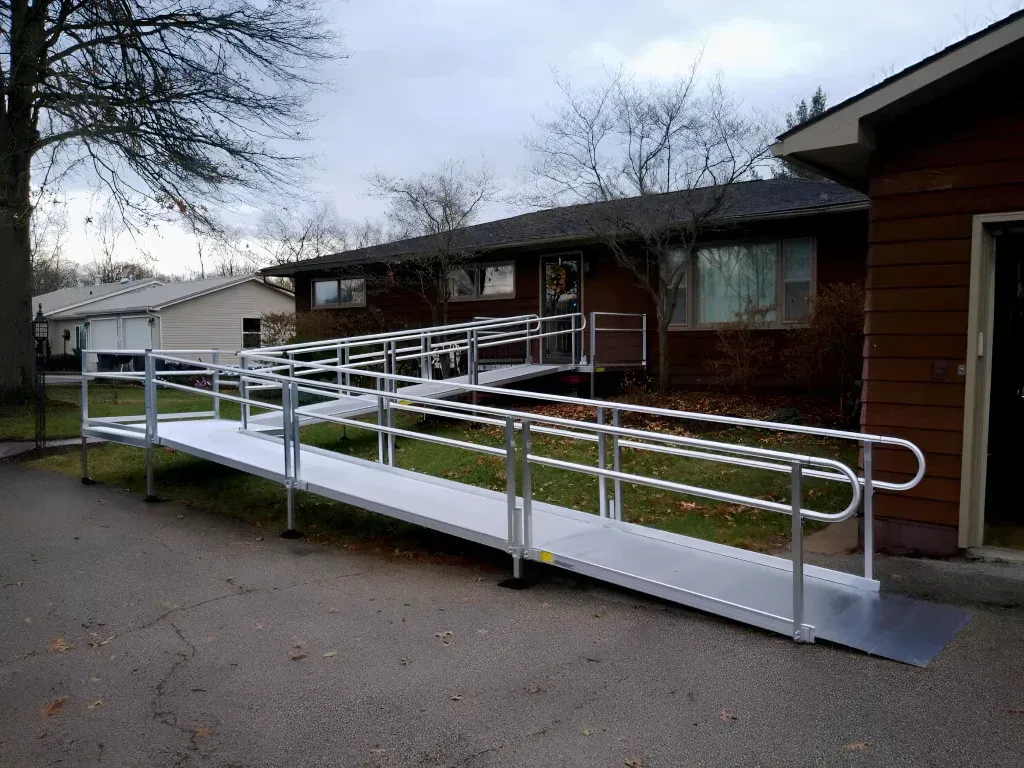
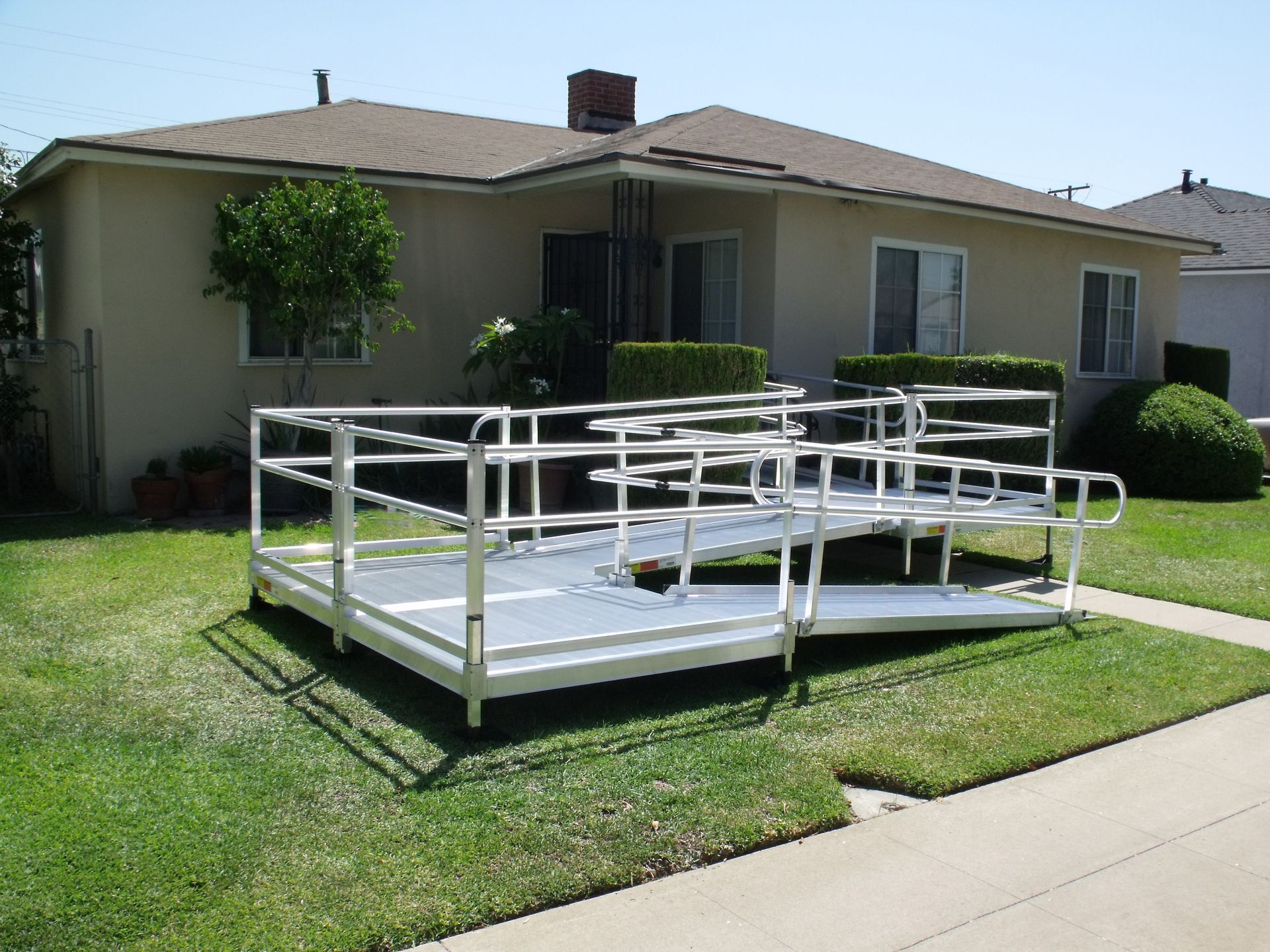
A ramp is usually the better fit when you have a low rise (a few steps or less), room in the yard, and want a low-maintenance, no-power-required solution. A vertical platform lift is usually the better fit when you're working with a higher rise, a tight footprint, or a landscape/HOA that can't accommodate a long incline. Here's what each one looks like installed:
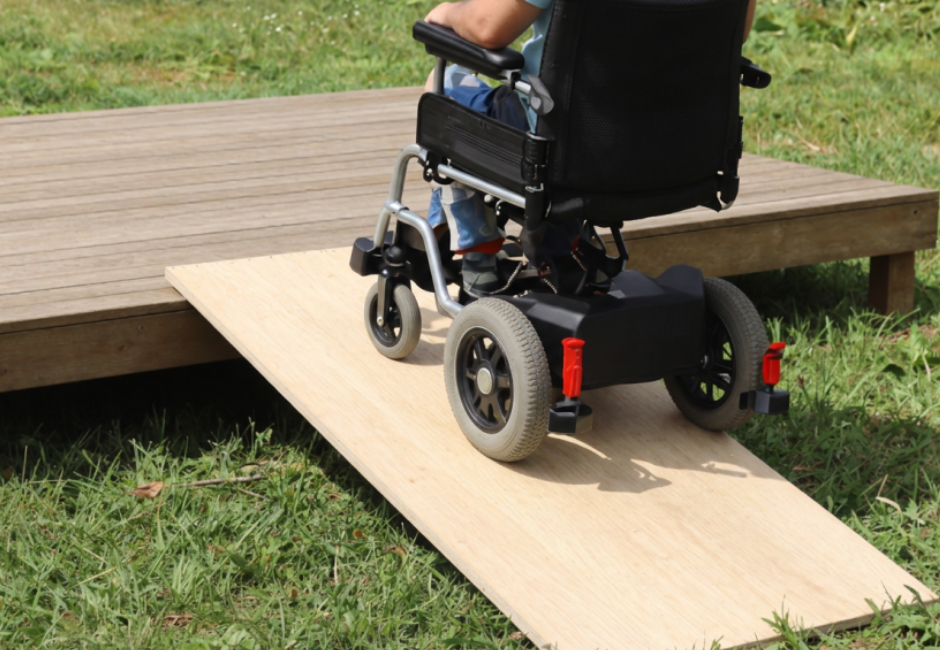
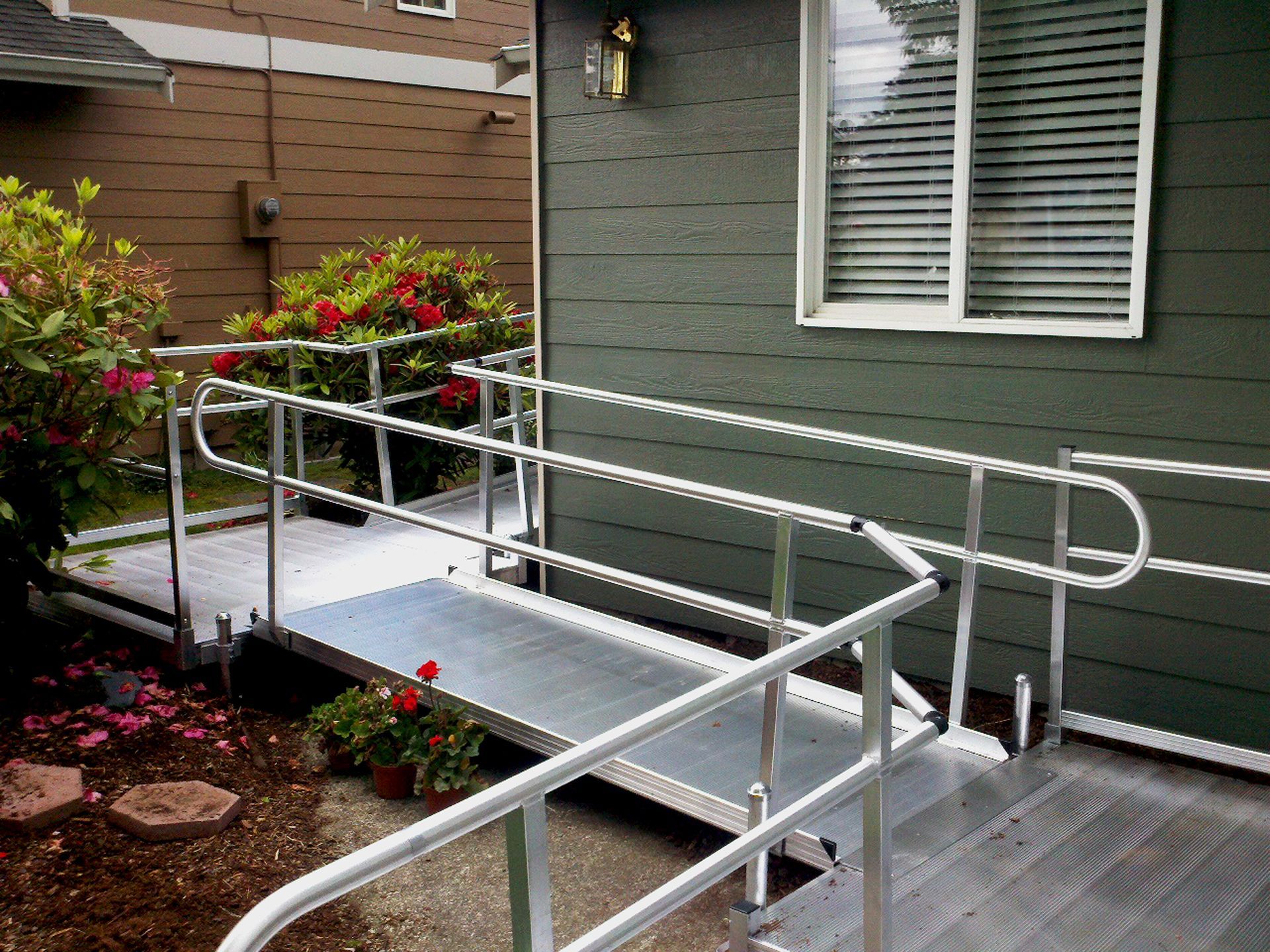
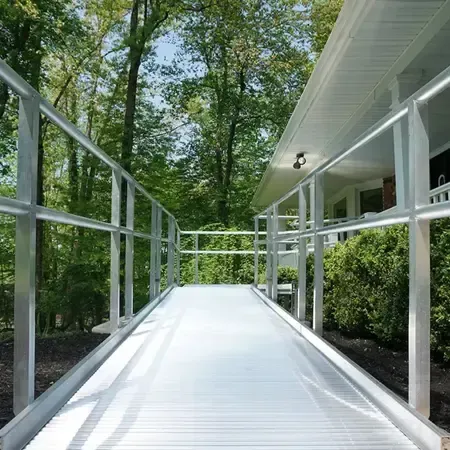 Wheelchair Ramp
A gradual, no-power incline — needs more yard space
Wheelchair Ramp
A gradual, no-power incline — needs more yard space
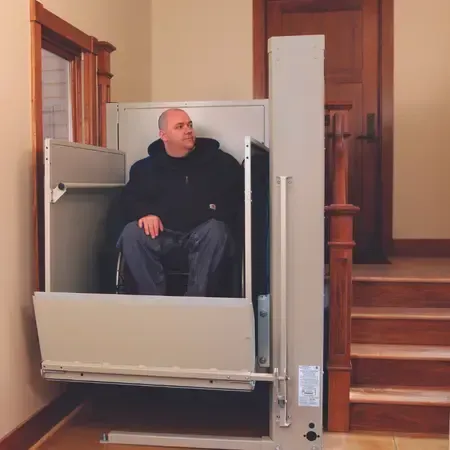 Vertical Platform Lift
Push-button vertical travel — needs almost no footprint
Vertical Platform Lift
Push-button vertical travel — needs almost no footprint
Space: the deciding factor for most homes
This is where the decision usually gets made before anything else. ADA guidelines call for a 1:12 slope on ramps — one foot of ramp for every inch of rise. That adds up fast: a modest 24-inch rise to your front door needs roughly 24 feet of ramp, plus landings at the top and bottom. Use our Ramp Slope & Layout Calculator to see the actual footprint for your rise before you commit to anything.
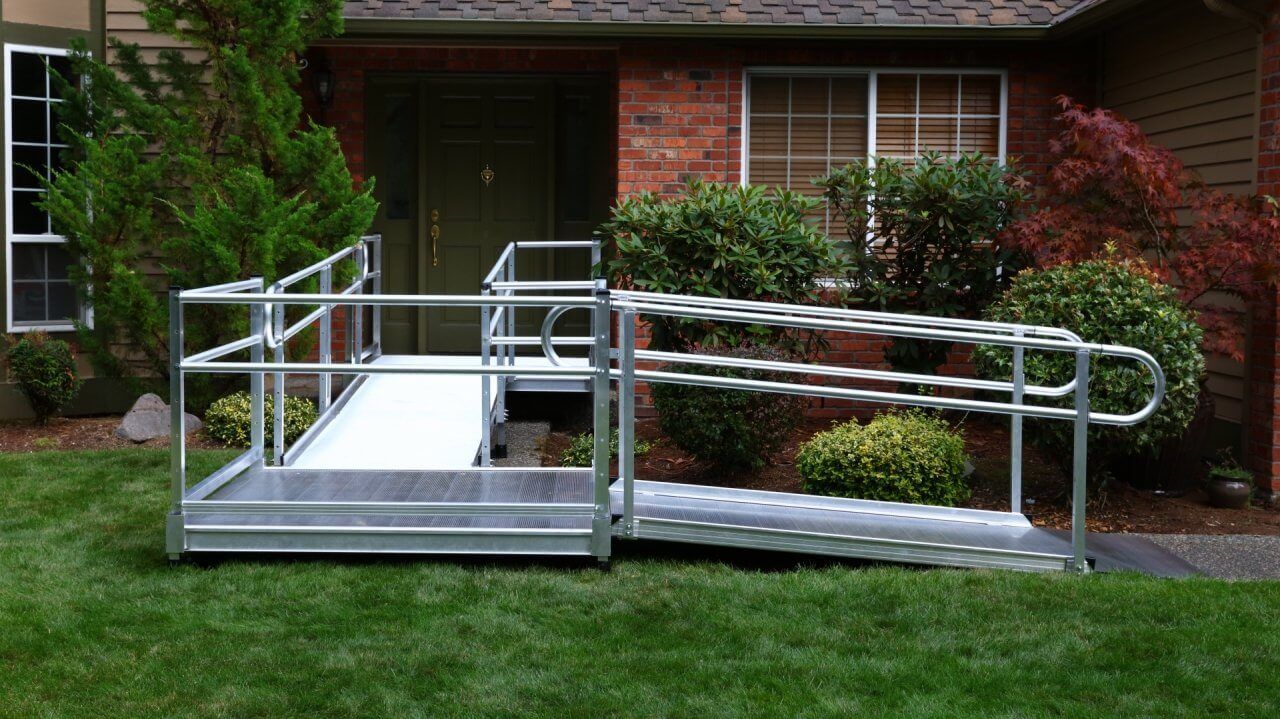
A vertical platform lift solves the same rise in a footprint of roughly 4–5 feet. It travels straight up and down — like a compact elevator — so it's the practical answer when a 24-foot ramp simply won't fit between your porch and property line, or when an HOA won't approve a long ramp run.
| Factor | Wheelchair Ramp | Vertical Platform Lift |
|---|---|---|
| Footprint | Large — 1 ft. of ramp per inch of rise (1:12) | Small — roughly 4–5 ft. total |
| Best for rise of | A few steps, up to ~3 ft. | Higher rises, up to 14 ft. |
| Power required | No | Yes (with battery backup) |
| Effort to use | Requires wheeling/pushing up an incline | Push a button, ride up |
| Weather exposure | Slip-resistant surface, but incline can be affected by ice | Weatherproof, corrosion-resistant outdoor models |
| Typical installed cost | Lower for short runs, rises with length | Higher up front, flat regardless of rise within travel range |
| Maintenance | Minimal — occasional cleaning, hardware checks | Scheduled service on motor, gate, and safety sensors |
| Portability | Modular/portable options can move with you | Semi-permanent installation |
For exact installed pricing ranges by type, see our Wheelchair Ramp Cost Guide, or run your numbers in the Cost Estimator.
Who tends to choose the ramp
Ramps win out when the yard has room to work with and the household wants the simplest possible mechanism — nothing to power, nothing to service on a schedule.
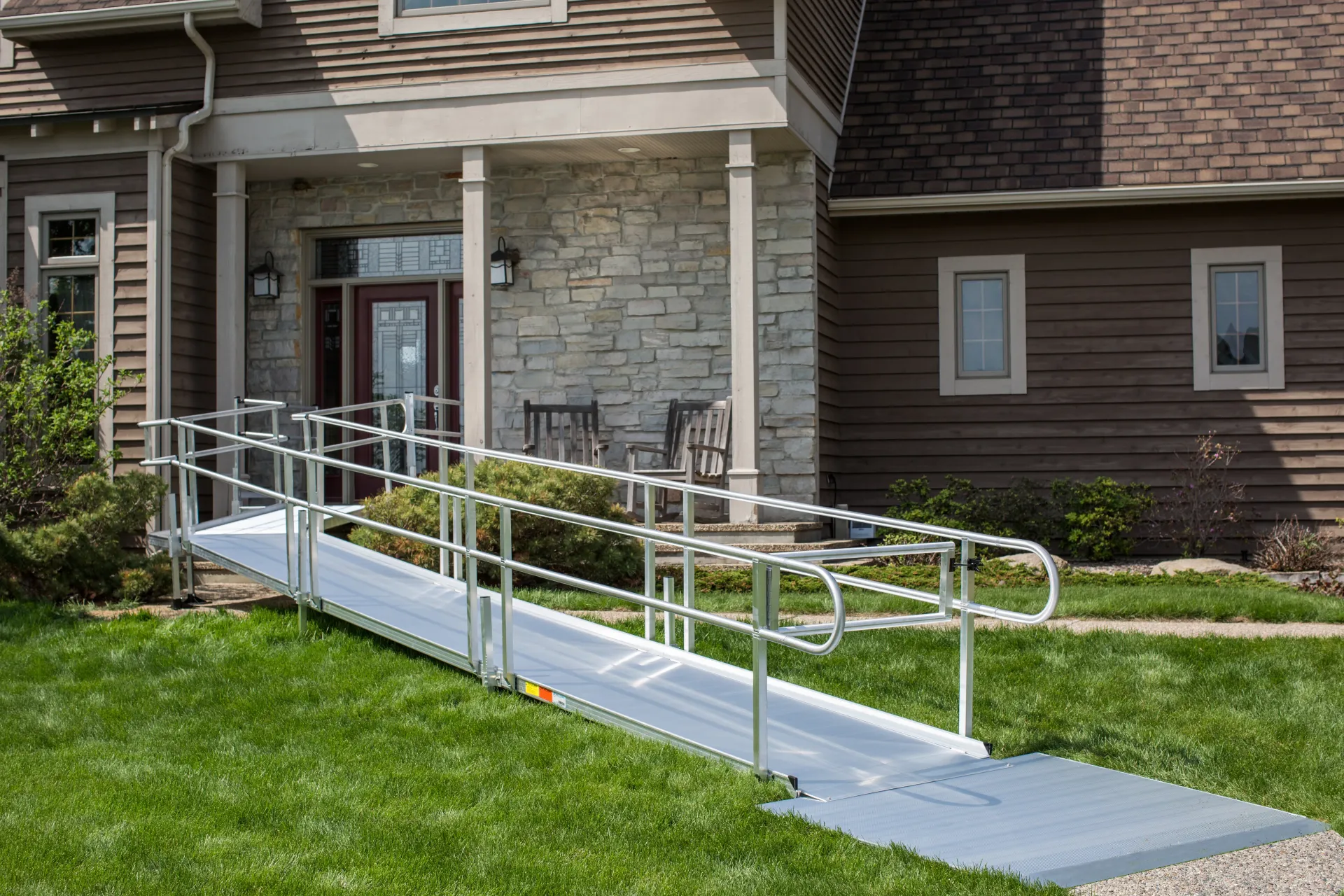
- Homes with a modest rise — a stoop or a few steps — where the yard has room for the incline
- Households that want zero moving parts and no power dependency
- Anyone who needs the solution to be temporary or portable (recovering from surgery, a short-term need, or a rental)
- Scooter and power-chair users who prefer to roll rather than transfer or wait on a platform
Who tends to choose the vertical platform lift
VPLs win out when space is the limiting factor, or when a long ramp run just isn't realistic — whether that's the lot size, the landscaping, or the HOA.
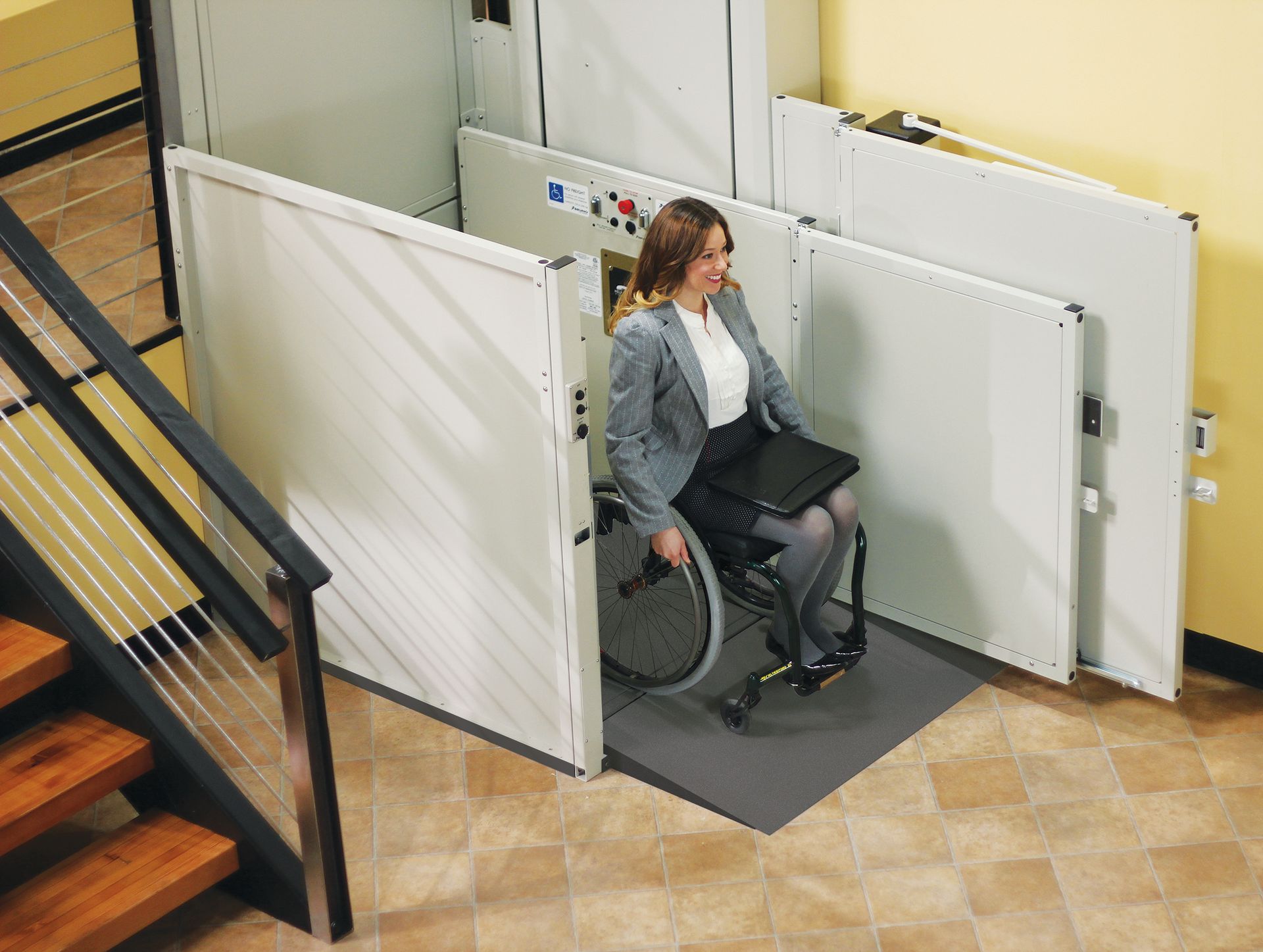
- Homes with a higher rise — a raised porch, a split-level entry, or a deck — where a compliant ramp would need to stretch 20, 30, even 40+ feet
- Tight side yards, narrow lots, or HOA rules that won't allow a long ramp structure
- Garage entries and multi-level access, where a lift can add a mid-stop
- Anyone who wants push-button ease with minimal physical effort
Already comparing a stairlift to a VPL instead of a ramp? Different situation, same logic — read our companion guide: Stairlift vs. Vertical Platform Lift: Which Is Right for Your Home?
What a Bruno vertical platform lift actually includes
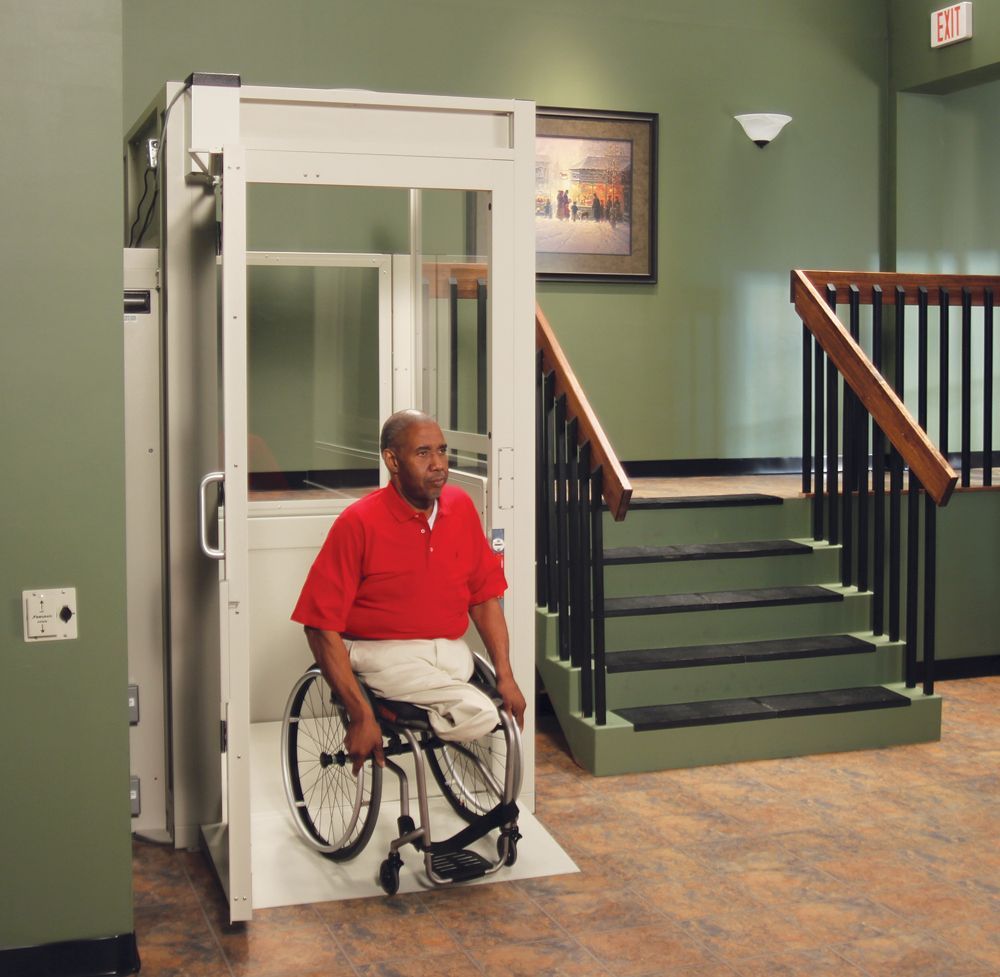
Altamira installs Bruno vertical platform lifts, and every unit is built around the same idea: get someone safely from one level to another without asking them to transfer out of their chair. Standard features include:
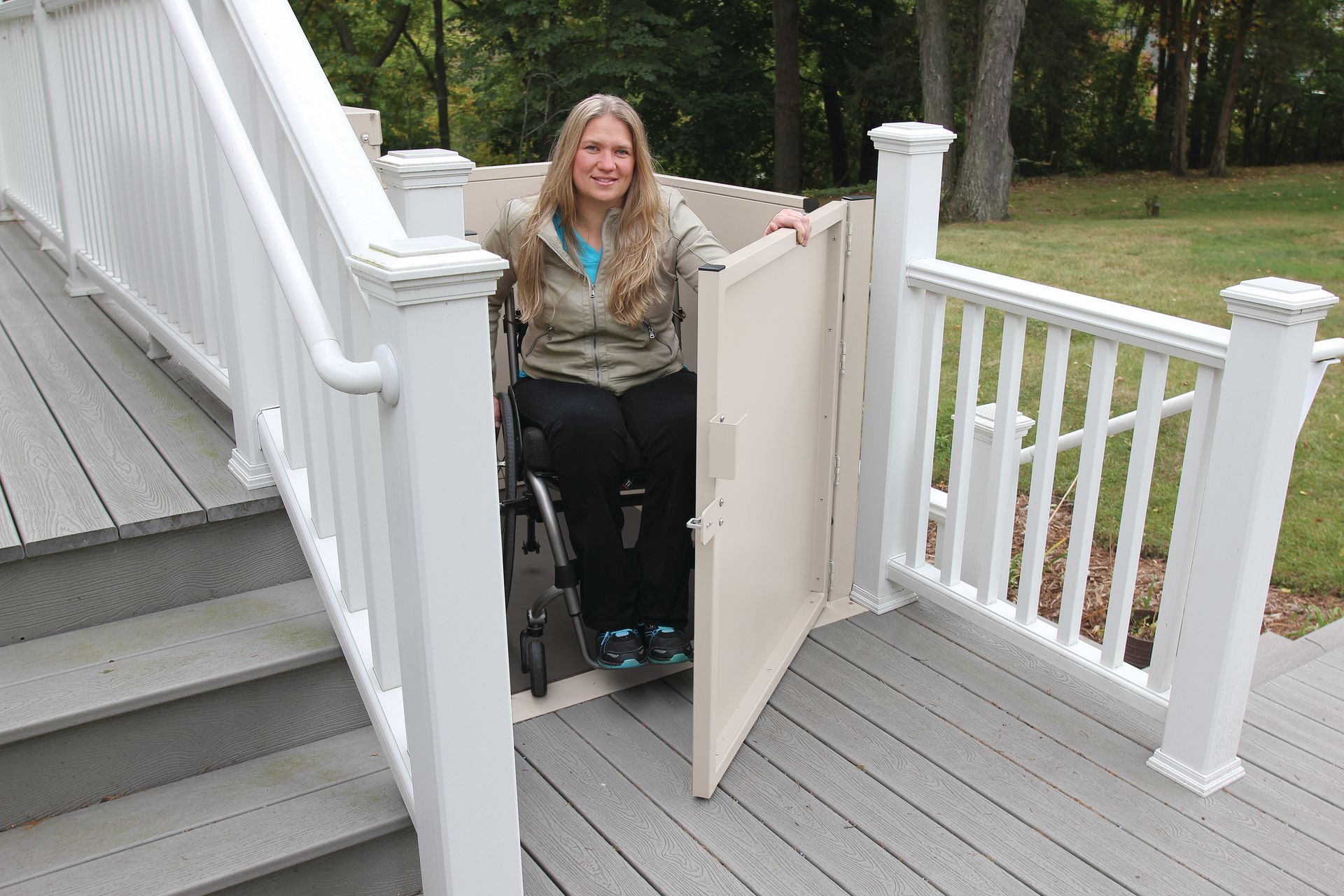
- Up to 14 feet of travel — enough for porches, decks, garages, and most multi-level entries
- Locking gates and obstruction sensors for secure, hands-free-safe operation
- Battery backup so the lift still works during a power outage
- All-weather, corrosion-resistant construction for outdoor installations
- Multiple platform sizes and finish options to match your home or business
See the full spec breakdown, FAQs, and photos on our Wheelchair Lifts / Vertical Platform Lifts page.
Paying for it: VA, Medicaid, and other help
Neither a ramp nor a VPL is cheap, and Medicare doesn't cover either one — but veterans, Medicaid recipients, and homeowners in several states have real options through VA HISA grants, Medicaid waiver programs, USDA and HUD grants, and tax deductions. As an SDVOSB with 15+ years of experience serving veterans, we walk families through this constantly.
Frequently asked questions
Can a vertical platform lift be installed outdoors?
Yes. Altamira's outdoor VPL models are built with corrosion-resistant materials and weatherproof finishes specifically for rain, snow, and temperature extremes.
Is a vertical platform lift ADA-compliant?
Yes — vertical platform lifts are a recognized ADA-compliant accessibility solution for both homes and businesses, along with compliant wheelchair ramps.
What happens to a VPL during a power outage?
Altamira's vertical platform lifts include a battery backup so they continue operating even if the power goes out.
Is a wheelchair ramp or a VPL cheaper?
It depends on the rise. For a short rise, a ramp is usually the lower-cost option. As rise increases, ramp length — and cost — climbs quickly, while a VPL's cost stays flat across its full travel range. See our Ramp Cost Guide for real numbers.
Can I try before I commit to a permanent installation?
Portable and modular ramps are a good way to solve a temporary need without a permanent structure. A free consultation is the fastest way to find out what fits your specific entryway — request one here.
Not sure yet? Get a free, no-pressure assessment
Every home is different, and the right answer usually comes down to a few feet of rise, a few feet of yard, and what your daily routine actually looks like. Altamira's Mobility Specialists will measure your space, walk through both options, and give you a straight answer — no obligation.
You can also browse our full product brochures or video library to see the equipment in action before your visit.
Ready to compare your options in person?
Schedule a free consultation with an Altamira Mobility Specialist. We'll assess your entryway, walk you through ramp and VPL options, and give you real pricing — no obligation.