

That wide range is why a price found online may not match the cost for your home. A doorway with a two-inch threshold may only need a small portable solution, while a porch that sits 24 inches above grade may require approximately 24 feet of ramp run at a 1:12 planning slope—before accounting for level areas, turns, or platforms.
The fastest way to estimate the size of a modular ramp is to measure the total vertical rise. Then use Altamira's wheelchair ramp slope and layout calculator to see a preliminary configuration. A professional site assessment is still needed to verify door clearance, yard space, drainage, handrails, anchoring, local code, and the mobility device being used.
How Much Does a Wheelchair Ramp Cost by Type?
| Ramp Type | Approximate Planning Range | Often Best For |
|---|---|---|
| Threshold ramp | $50–$1,300 | Raised doorways, sliding doors, and very small changes in level |
| Portable or suitcase ramp | $100–$2,000 | Travel, temporary needs, renters, curbs, and a limited number of low steps |
| Professionally installed modular ramp | About $1,700–$5,000 for many projects; larger layouts can exceed $5,000 | Daily residential access with a configurable, removable aluminum system |
| Custom wood ramp | About $2,500–$10,000+ | Permanent custom construction when appearance and integration with the home are priorities |
| Concrete ramp | About $3,000–$10,000+ | Permanent, high-durability access where excavation and masonry work are practical |
Important: These are broad national planning ranges, not an Altamira quote. Prices vary by region, material, labor, permit requirements, site conditions, and the complete configuration. A short straight ramp may cost much less than a long switchback system with multiple platforms.
How Ramp Length Changes the Cost
Ramp length is usually one of the largest cost drivers because a higher entrance requires more ramp sections, supports, handrails, and possibly one or more platforms. The commonly used 1:12 planning ratio means one foot of ramp run for every one inch of vertical rise.
| Vertical Rise | Approximate Ramp Run at 1:12 | Planning Example |
|---|---|---|
| 6 inches | 6 feet | A low step or small landing |
| 12 inches | 12 feet | Several steps |
| 18 inches | 18 feet | A moderately raised porch |
| 24 inches | 24 feet | A common porch-height planning example |
| 30 inches | 30 feet | A higher entrance that may require turns or a platform |
These examples show ramp run only. They do not automatically include the level area at the doorway, bottom approach, turning platforms, door maneuvering clearance, or additional space required by local code and the selected ramp system.
Does a Residential Wheelchair Ramp Have to Follow ADA Standards?
The ADA Standards require a maximum 1:12 running slope for ramps on covered accessible routes, along with requirements for features such as landings, clear width, handrails, edge protection, and drainage. However, the ADA does not automatically govern every privately owned single-family home.
For a residential project, the installer should verify the rules that actually apply to the property, including local building codes, permit requirements, manufacturer instructions, funding-program specifications, and the user's mobility needs. Even when the ADA is not legally required, a gentle slope and accessible-design principles can provide a useful safety benchmark. You can review the U.S. Access Board's ramp guidance for the federal standards used on covered accessible routes.
What Determines the Final Wheelchair Ramp Price?
- Total vertical rise. A higher porch or entrance generally requires a longer ramp, which adds ramp sections, handrails, supports, and labor.
- Straight, L-shaped, or switchback layout. Turns and changes in direction may require larger platforms and more components than a straight run.
- Top and bottom access. The design must account for the doorway, door swing, threshold, porch dimensions, approach area, and room to maneuver safely.
- Ramp material. Aluminum, wood, concrete, steel, rubber, and composite products have different purchase, installation, weather-resistance, and maintenance considerations.
- Handrails and edge protection. The correct rail and curb configuration depends on the ramp design, rise, user, local rules, and manufacturer requirements.
- Site preparation. Uneven soil, landscaping, drainage, concrete pads, obstructions, and frost conditions can add labor and materials.
- Permits and inspections. Requirements vary by municipality and can affect both project cost and timing.
- Wheelchair or scooter specifications. The device width, turning radius, combined user-and-device weight, ground clearance, and manufacturer's maximum slope must be considered.
Which Type of Ramp Is Best for a Home?
Threshold Ramps
A threshold ramp is often the least expensive choice when the obstacle is a raised doorway, sliding-door track, or very small change in level. These ramps are available in different heights, widths, materials, and weight capacities.
Portable and Suitcase Ramps
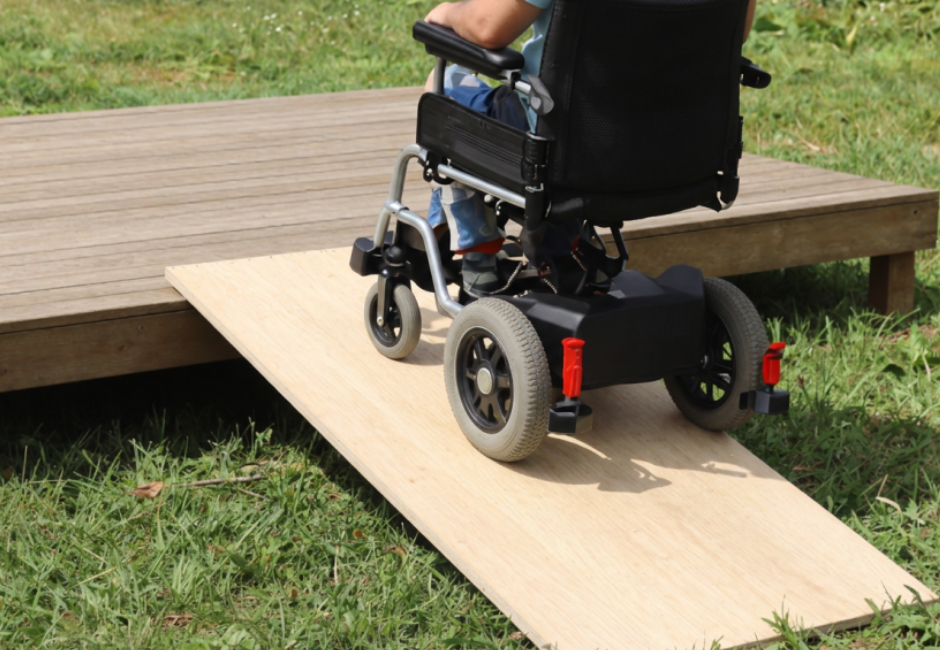
Portable ramps can be useful for travel, temporary recovery, visiting family, or crossing a limited number of low steps. They must be matched carefully to the rise, available length, mobility device, and manufacturer's slope limits. A ramp that is too short can create a steep and unsafe incline.
Modular Aluminum Ramps
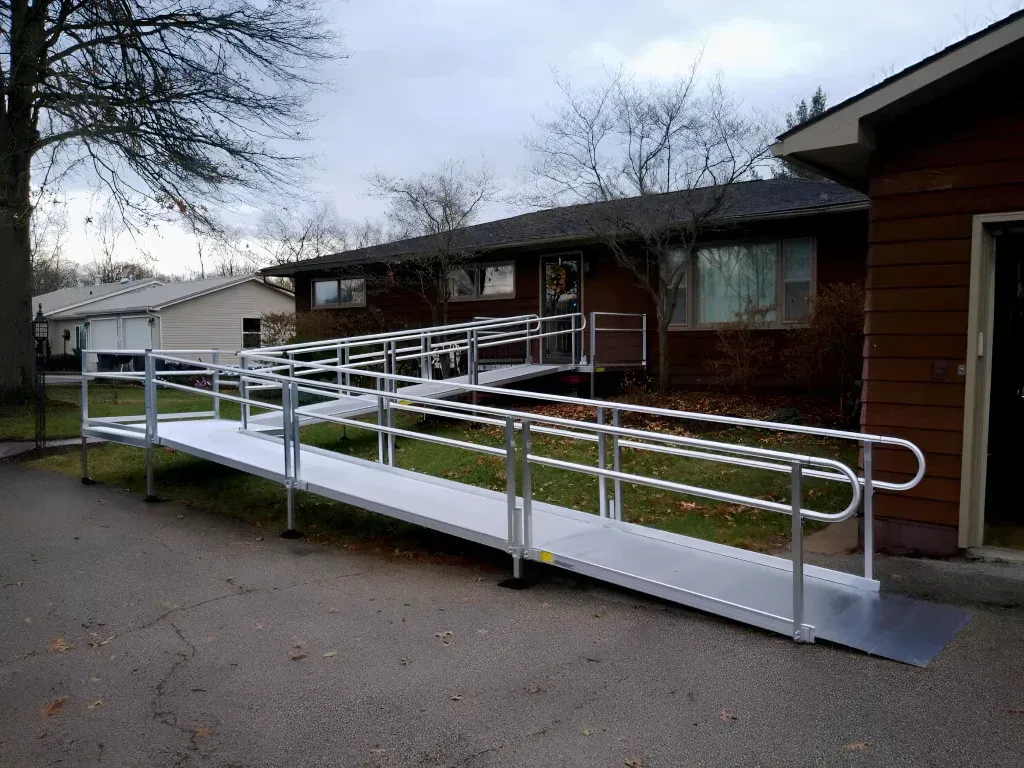
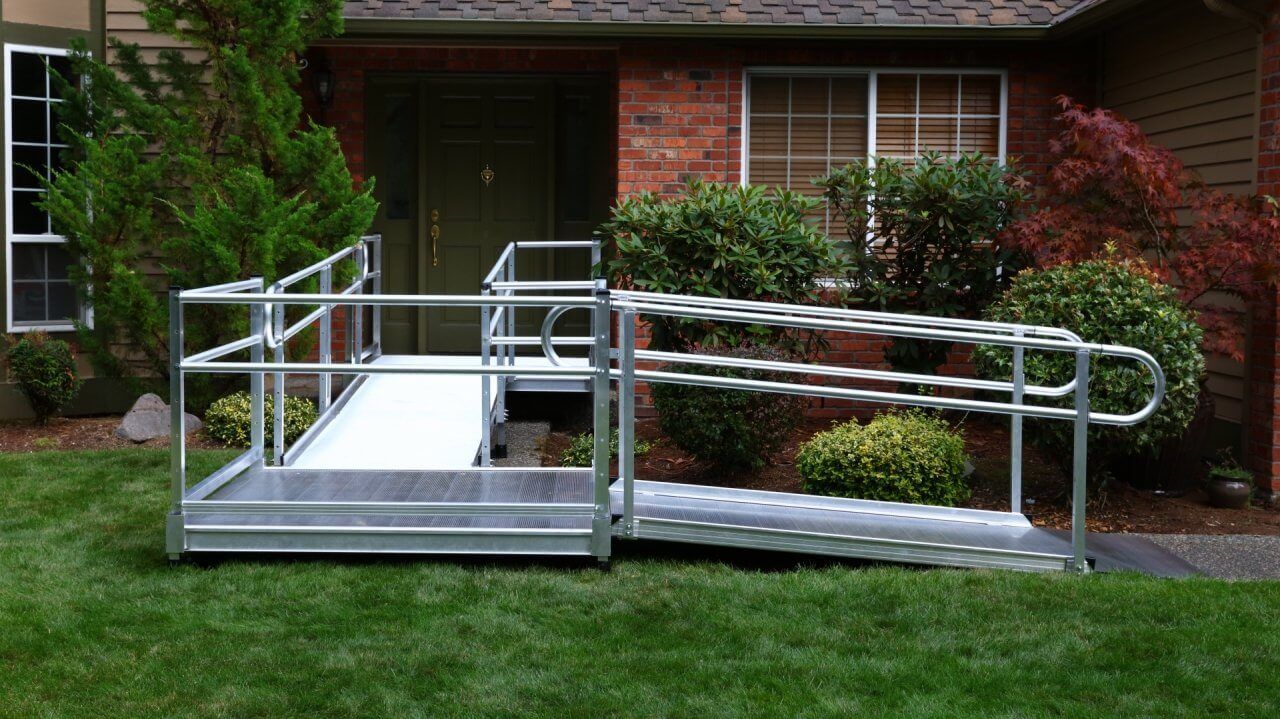
Modular aluminum systems are a common residential choice because they can be configured for straight, L-shaped, or switchback layouts and can often be removed or reconfigured later. Aluminum is corrosion-resistant and does not require the staining or sealing associated with wood. Explore Altamira's modular, portable, and threshold wheelchair ramp options.
Wood Ramps
Wood can be custom-built to match a porch or deck, but it requires ongoing inspection and maintenance. Moisture, rot, warping, fasteners, railings, and the condition of the slip-resistant surface should be monitored regularly.
Concrete Ramps
Concrete can provide a durable permanent solution, but excavation, forming, reinforcement, drainage, curing time, and future removal can make the project more complex and expensive.
When Is a Wheelchair Lift Better Than a Ramp?
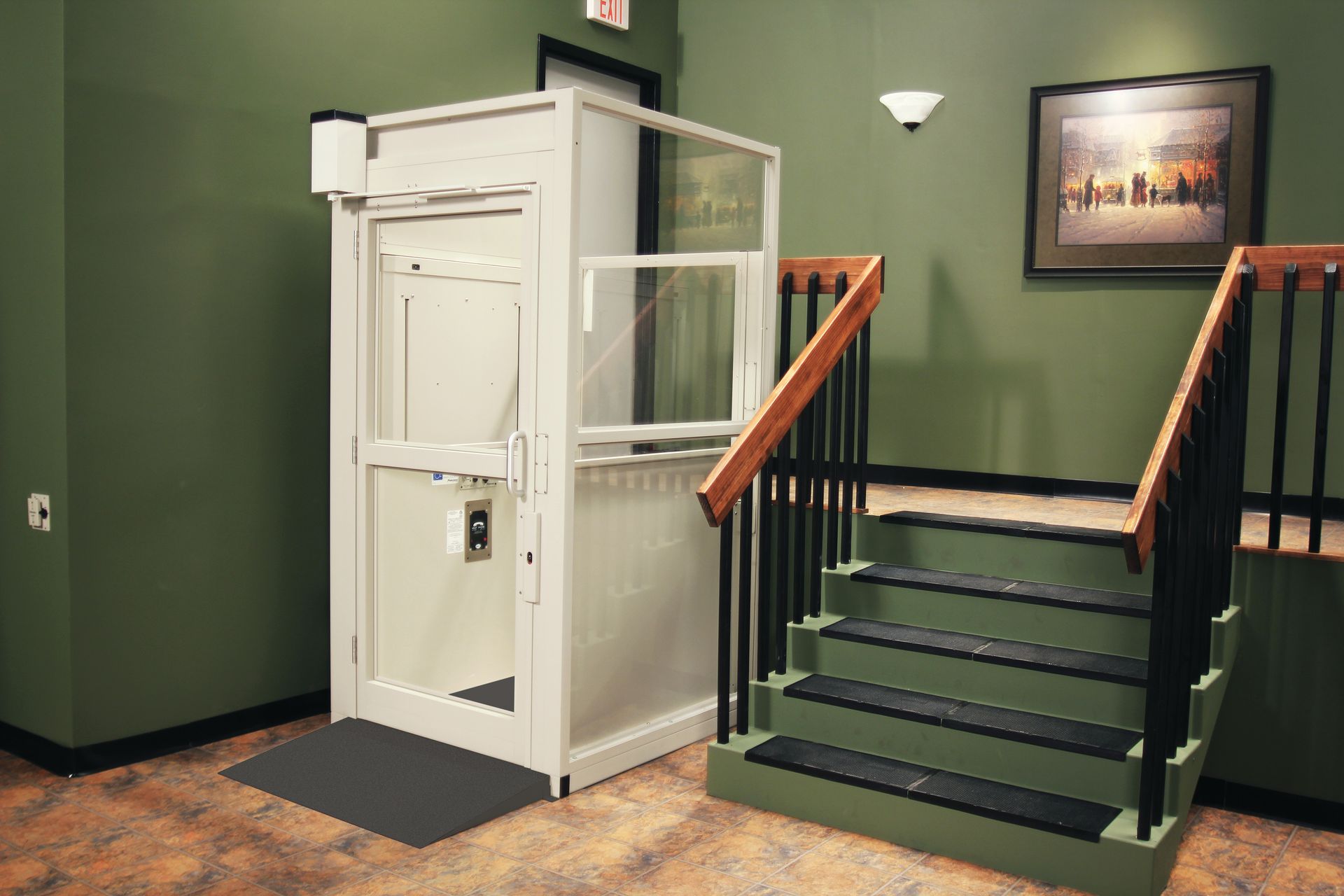
A long ramp is not always the best use of the available space. A vertical platform lift, also called a wheelchair lift or VPL, may be worth considering when the entrance is high, the lot is narrow, the yard cannot accommodate the required ramp length, or preserving driveway and walkway space is important.
A professional assessment can compare the complete ramp configuration with a lift—not just the purchase price. The comparison should include usable space, maintenance, electrical needs, weather exposure, permitting, emergency operation, the user's abilities, and long-term plans for the home.
Can Medicare, Medicaid, the VA, or Insurance Help Pay?
Original Medicare
Original Medicare generally covers qualifying durable medical equipment, but permanent structural home modifications such as wheelchair ramps are usually not covered. Some Medicare Advantage plans may offer supplemental benefits that differ by plan and service area, so the member should verify coverage directly with the plan before ordering.
Medicaid Programs
Some state Medicaid Home and Community-Based Services programs can include environmental or home accessibility modifications for eligible participants. Benefits, waiting lists, authorization rules, approved providers, and maximum amounts vary by state and program.
VA HISA Benefit
The VA Home Improvements and Structural Alterations benefit may provide a lifetime benefit of up to $6,800 for certain qualifying Veterans and Servicemembers, or up to $2,000 for some other eligible cases. The work must be medically justified. The VA identifies permanent ramping that improves access to the primary residence as a potentially covered modification, while removable equipment such as portable ramps is excluded. Read Altamira's VA HISA grant guide before starting the application process.
Private Insurance and Other Assistance
Private insurance coverage varies. Area Agencies on Aging, state assistive-technology programs, nonprofit organizations, workers' compensation, long-term care benefits, and local housing programs may also provide assistance in some situations. Approval should be confirmed before work begins.
How Can You Avoid Paying for the Wrong Ramp?
- Measure the total rise from the lower surface to the finished entrance level.
- Identify the exact wheelchair, scooter, walker, or other mobility device that will use the ramp.
- Check the device's width, turning radius, weight, ground clearance, and maximum recommended incline.
- Use the Altamira ramp calculator for preliminary planning.
- Have a professional inspect the doorway, available space, drainage, surface conditions, and possible layouts.
- Confirm permitting, code, funding, and landlord or homeowner-association requirements before installation.
- Compare the full ramp design with a vertical platform lift when space is limited or the rise is high.
Helpful Wheelchair Ramp Resources
Frequently Asked Questions About Wheelchair Ramp Cost
How much does a wheelchair ramp cost?
A wheelchair ramp can cost about $50 for a basic threshold ramp to $10,000 or more for a long permanent installation. Many professionally installed residential projects fall roughly between $1,100 and $5,000, but longer systems with turns, platforms, rails, and site work can cost more.
How much does a wheelchair ramp cost per linear foot?
Material pricing can range roughly from $50 to $250 per linear foot depending on the material. Installed cost is not determined by ramp length alone because platforms, handrails, supports, labor, permits, drainage, and site preparation can add significantly to the total.
How long should a wheelchair ramp be for a 24-inch rise?
At a 1:12 planning slope, a 24-inch rise requires approximately 24 feet of ramp run. The complete layout may require additional level space or platforms, and the final design must be checked against local requirements, manufacturer instructions, and the user's mobility device.
Does Medicare pay for a wheelchair ramp?
Original Medicare generally does not pay for permanent structural home modifications such as wheelchair ramps. Some Medicare Advantage plans may offer supplemental benefits, so coverage should be confirmed directly with the specific plan.
Does the VA HISA benefit cover wheelchair ramps?
The VA HISA benefit can cover medically necessary permanent ramping that improves access to a qualifying Veteran's or Servicemember's primary residence. Benefit limits and eligibility rules apply, and portable ramps are generally excluded.
How long does it take to install a wheelchair ramp?
A straightforward modular aluminum ramp can often be installed in one day after the design, components, and approvals are ready. Complex layouts, custom construction, concrete work, site preparation, or permitting can extend the schedule.
Is a wheelchair ramp or vertical platform lift better?
A ramp may be the simpler choice when there is enough space for a gentle incline. A vertical platform lift may be better when the rise is high or the property cannot accommodate a long ramp. A site assessment should compare safety, space, cost, maintenance, and the user's needs.
Get an Accurate Ramp Quote for Your Home
Online estimates cannot account for your entrance height, yard layout, door clearance, mobility device, local requirements, or the complete component list. Altamira provides free, no-obligation accessibility consultations to help determine the right ramp or lift solution.
Schedule Your Free ConsultationPlanning note: Cost figures are approximate national ranges and are not a guarantee of local pricing. Accessibility requirements and available funding vary by property, jurisdiction, program, and individual eligibility.