

More than 7 million Americans age 65 and older are living with Alzheimer's today, and that number is expected to keep climbing as the population ages. About 80% of people with Alzheimer's and related dementias are cared for at home, which means the house itself becomes one of the most important caregiving tools a family has. Behind almost every diagnosis is a family member trying to answer the same quiet, urgent question: How do I keep them safe at home?
It's a question worth taking seriously, and a practical one. Many of the changes that make a home safer for someone with dementia are affordable and can be added gradually as needs change — you don't have to do everything at once.
The National Institute on Aging recommends walking through the home room by room to spot hazards before they cause harm. That's exactly how we've organized this guide. As dementia progresses, a person's depth perception, memory, and judgment change, so a space that felt perfectly safe last year may need a fresh look today.
Start with the whole-home basics
Before you focus on any single room, a few changes benefit the entire house. Good lighting matters enormously, especially at the top and bottom of stairs, and nightlights or automatic light sensors help reduce confusion and falls after dark. Because people with dementia can experience changes in depth perception, a shift in flooring — say, from carpet to tile — may be misread as a step, causing a stumble. Keeping flooring consistent and avoiding busy patterns can help.
Make walls a lighter color than the floor to create contrast, limit mirrors (reflections can be confusing or frightening), and set the water heater to 120°F to prevent scalding. Dangerous items — medications, cleaning products, alcohol, tools, and firearms — should be locked away or removed entirely.
The entryway and the front door
Wandering is one of the most serious safety concerns in dementia care. The NIA recommends keeping exterior doors locked (a keyed deadbolt or a second lock placed high or low can help), using simple signage like "STOP" or "DO NOT ENTER," and installing a smart doorbell or alarm that chimes when a door opens so you're alerted if your loved one tries to leave.
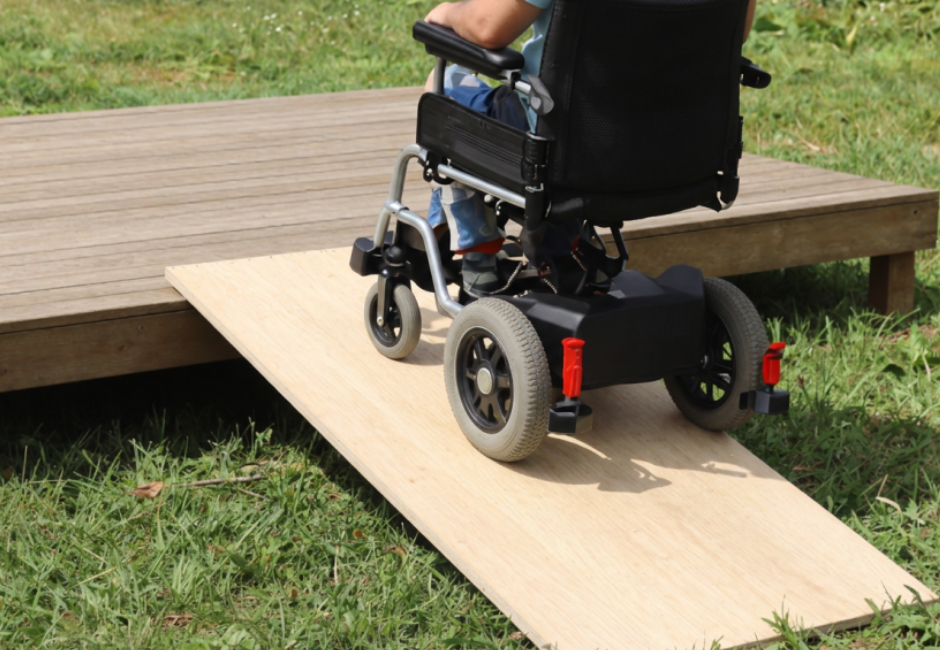
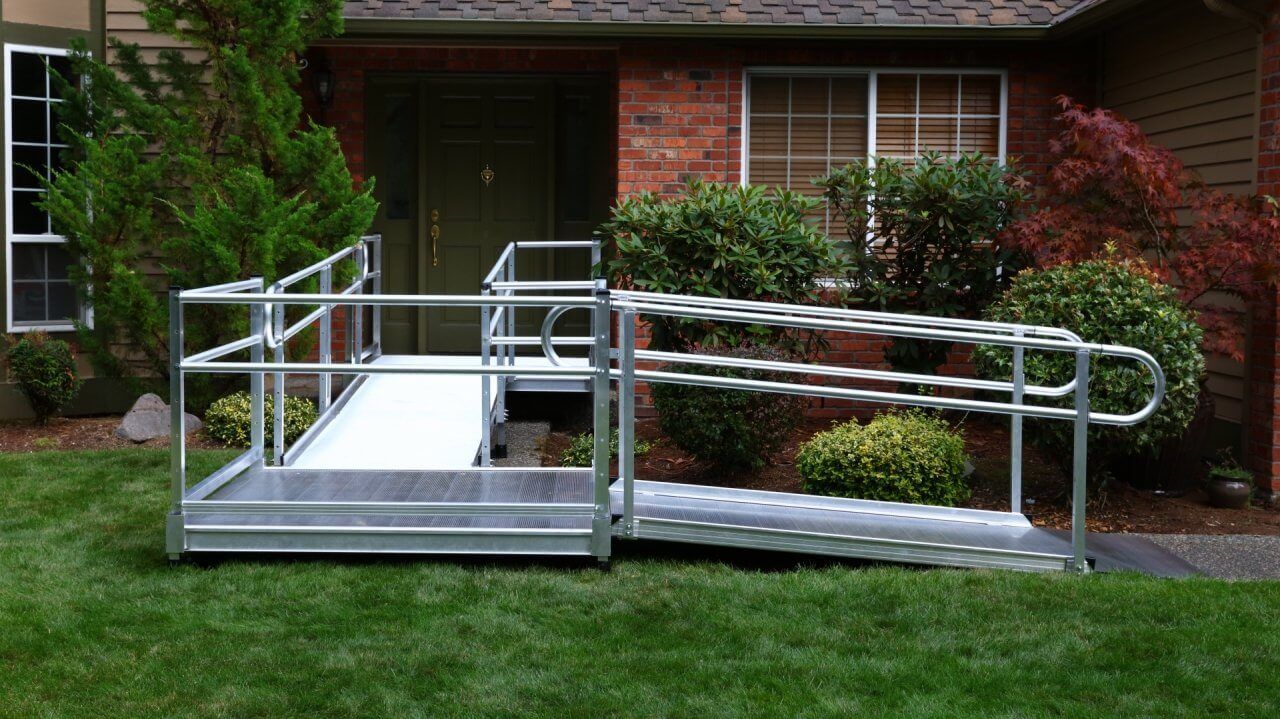
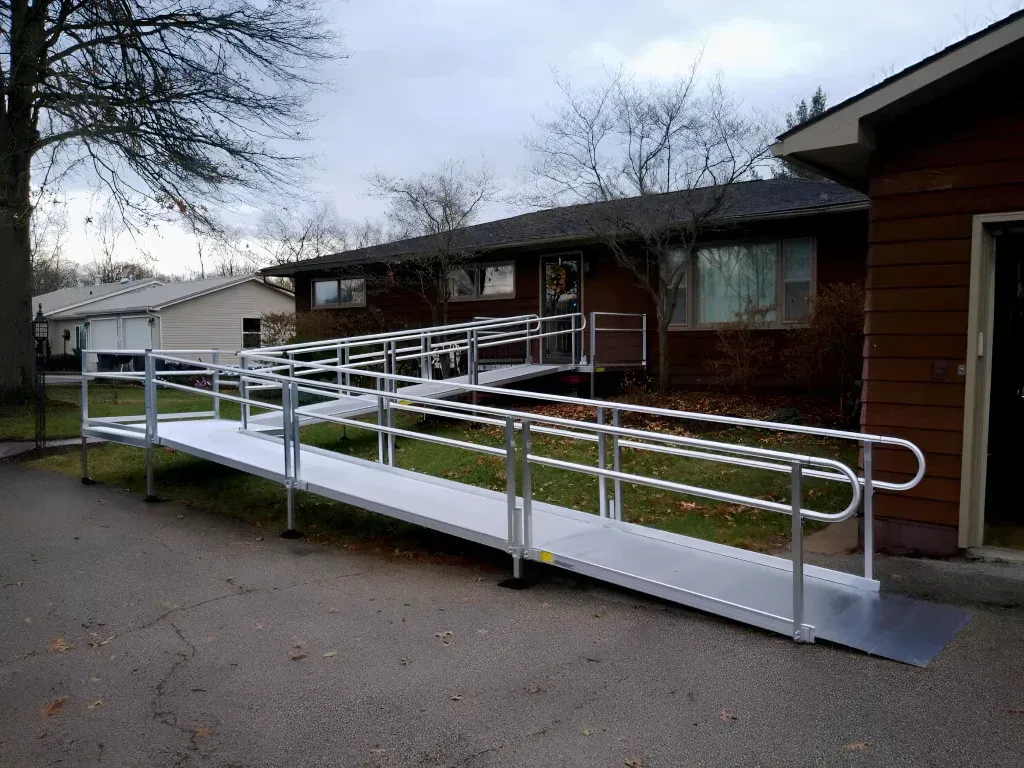
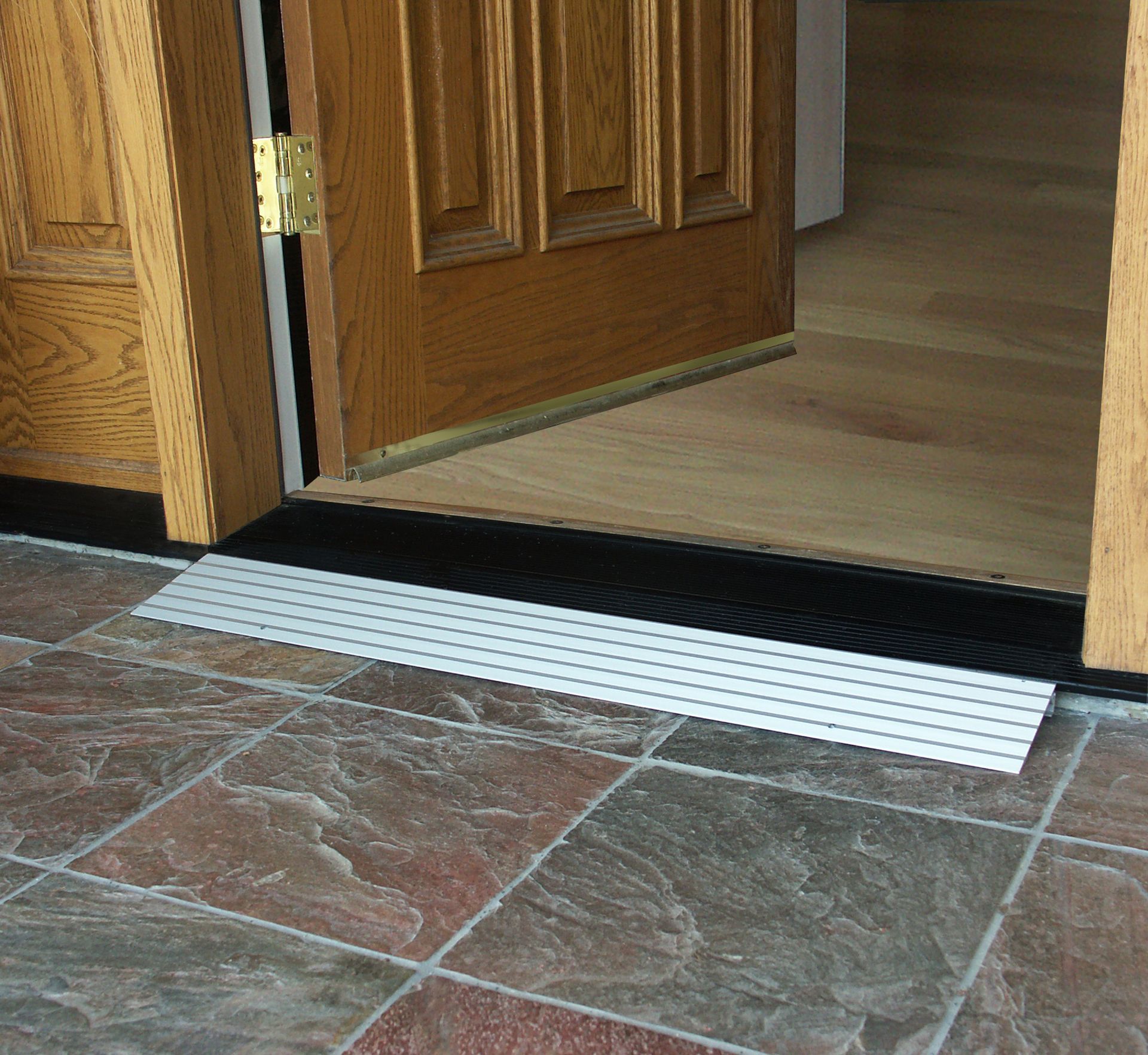
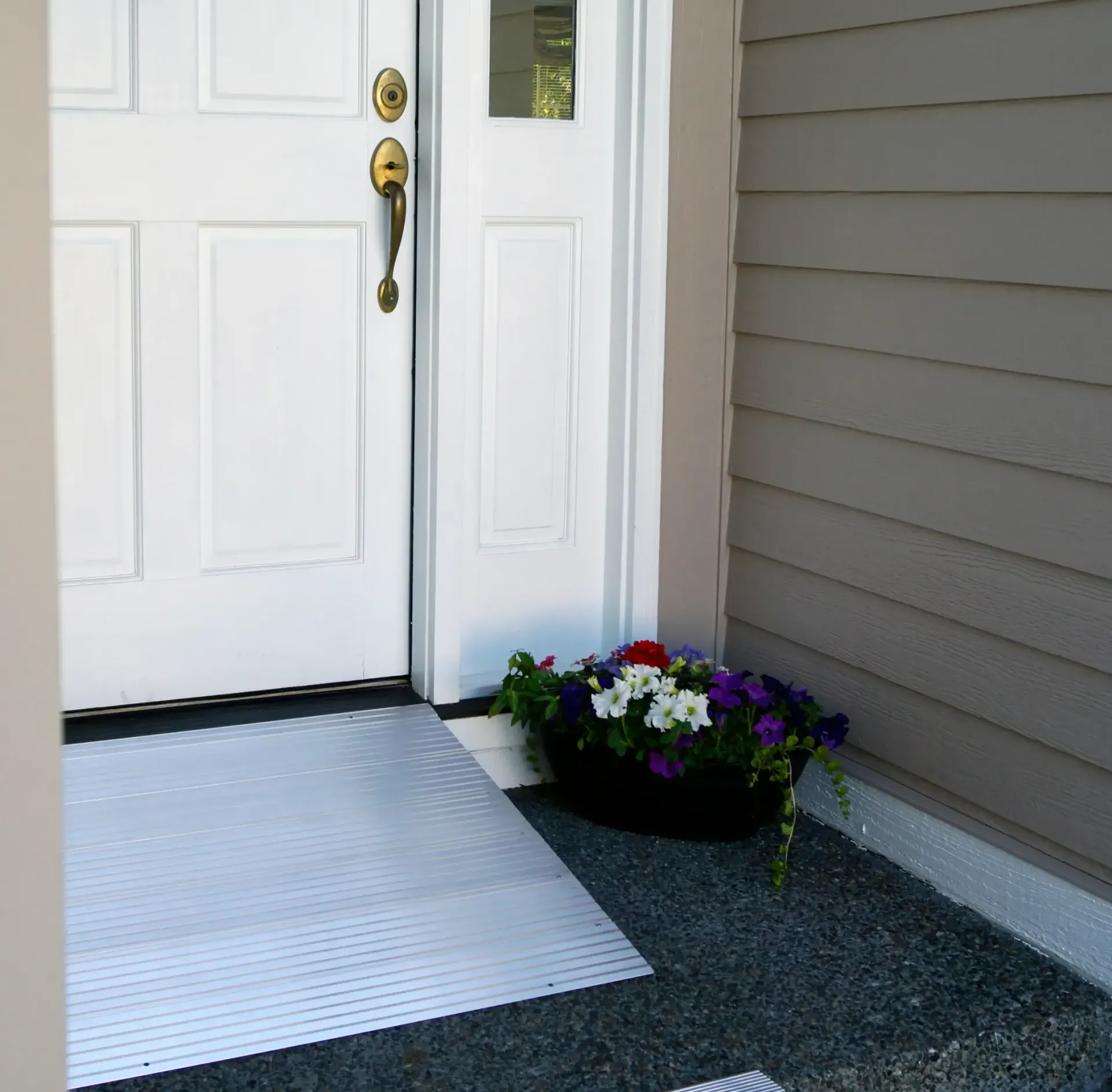
Entryways carry a second risk: falling on the way in and out. Steps at the front or back door are a common hazard, and a person with dementia may misjudge them. A wheelchair ramp can create a safe, step-free entrance, and many modular ramp systems can be reconfigured or removed if needs change — useful when you're not sure how long a solution will be needed.
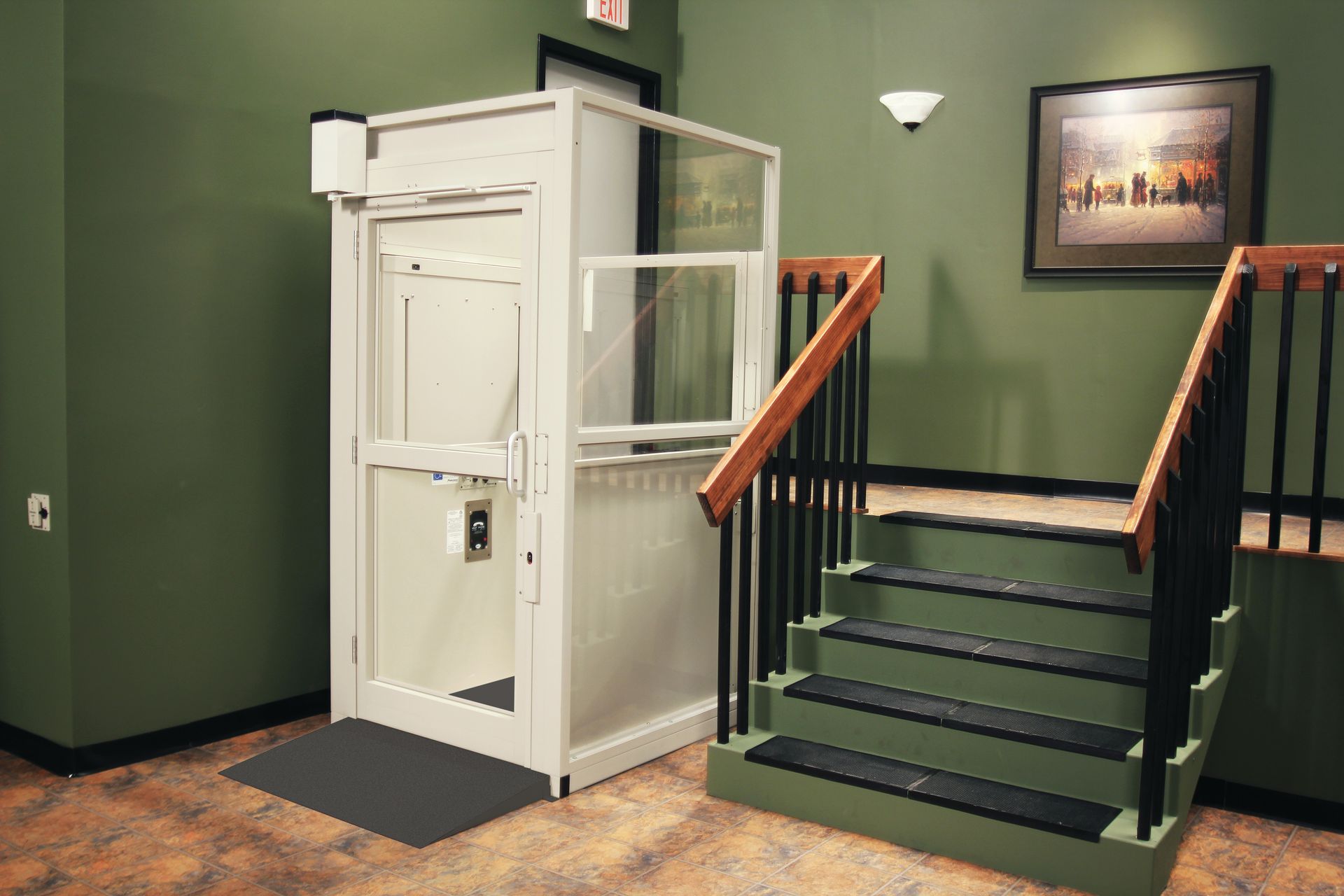
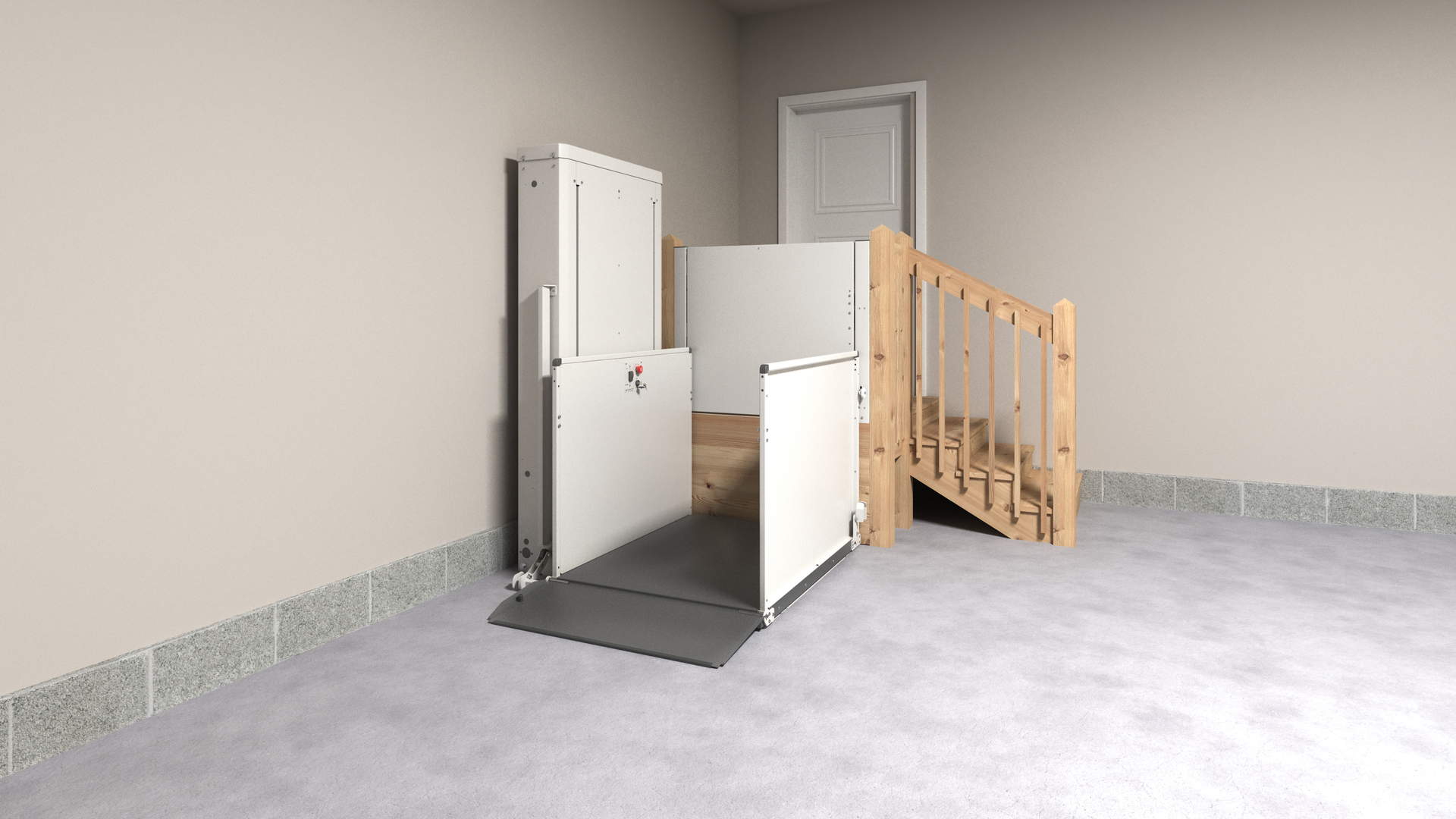
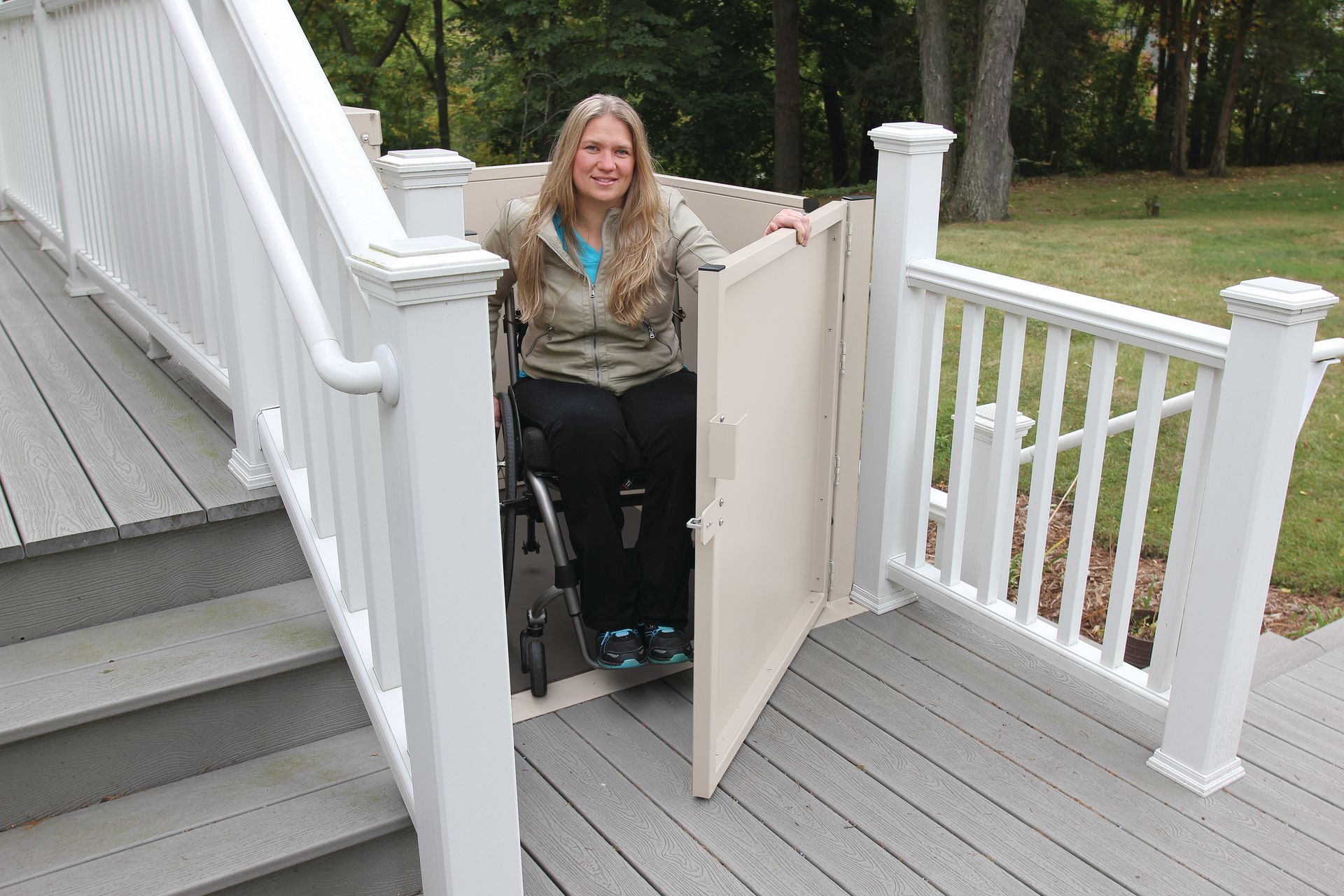
Where the height difference is too great for a ramp, a wheelchair lift can provide safe entry to a front door, garage, or deck, configured with applicable accessibility, manufacturer, site, and local requirements in mind.
Watch a ramp installation video → Browse ramp & lift brochures →
Staircases
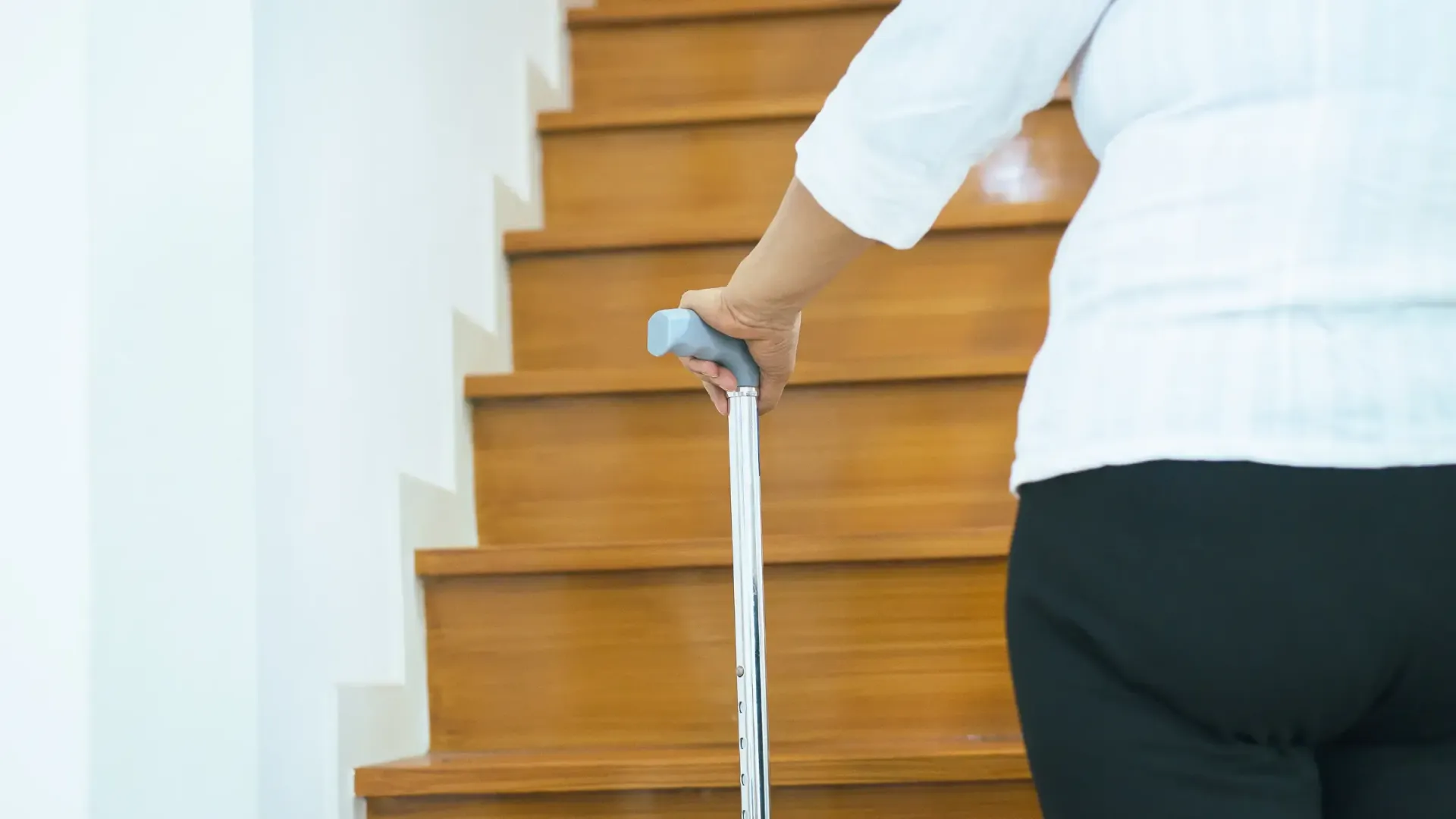
Stairs combine two dementia risk factors: fall danger and unsupervised wandering between floors. The NIA suggests marking the edges of steps with brightly colored tape so they're easier to see, and making sure railings are secure and lighting is strong at both the top and bottom.
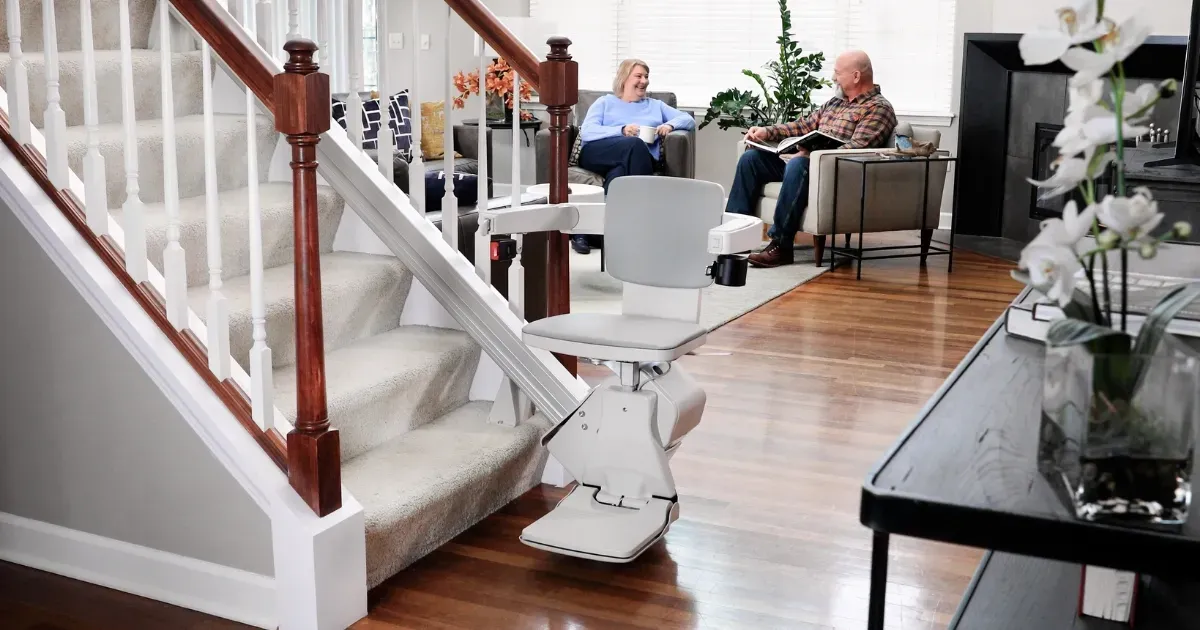
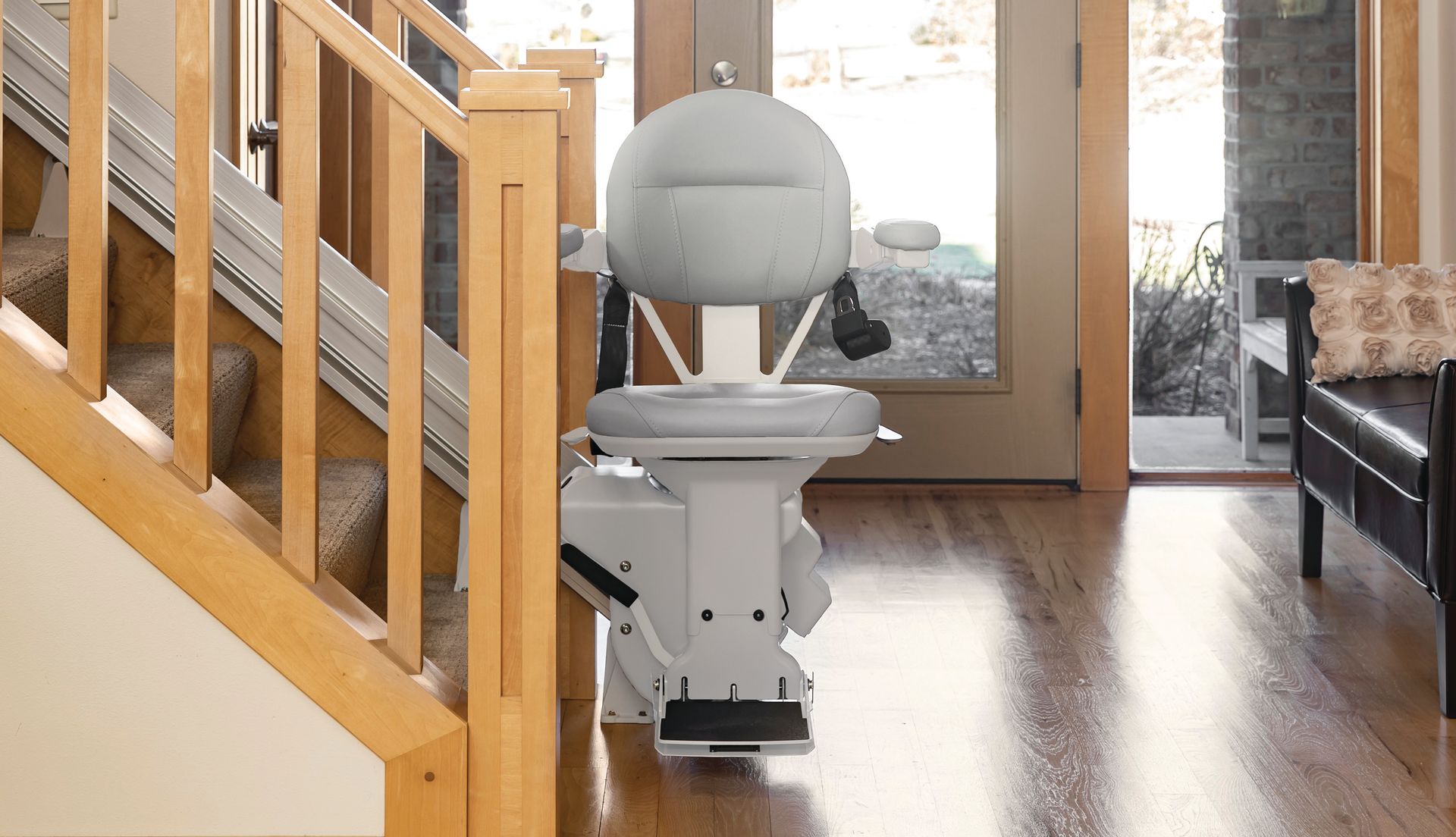
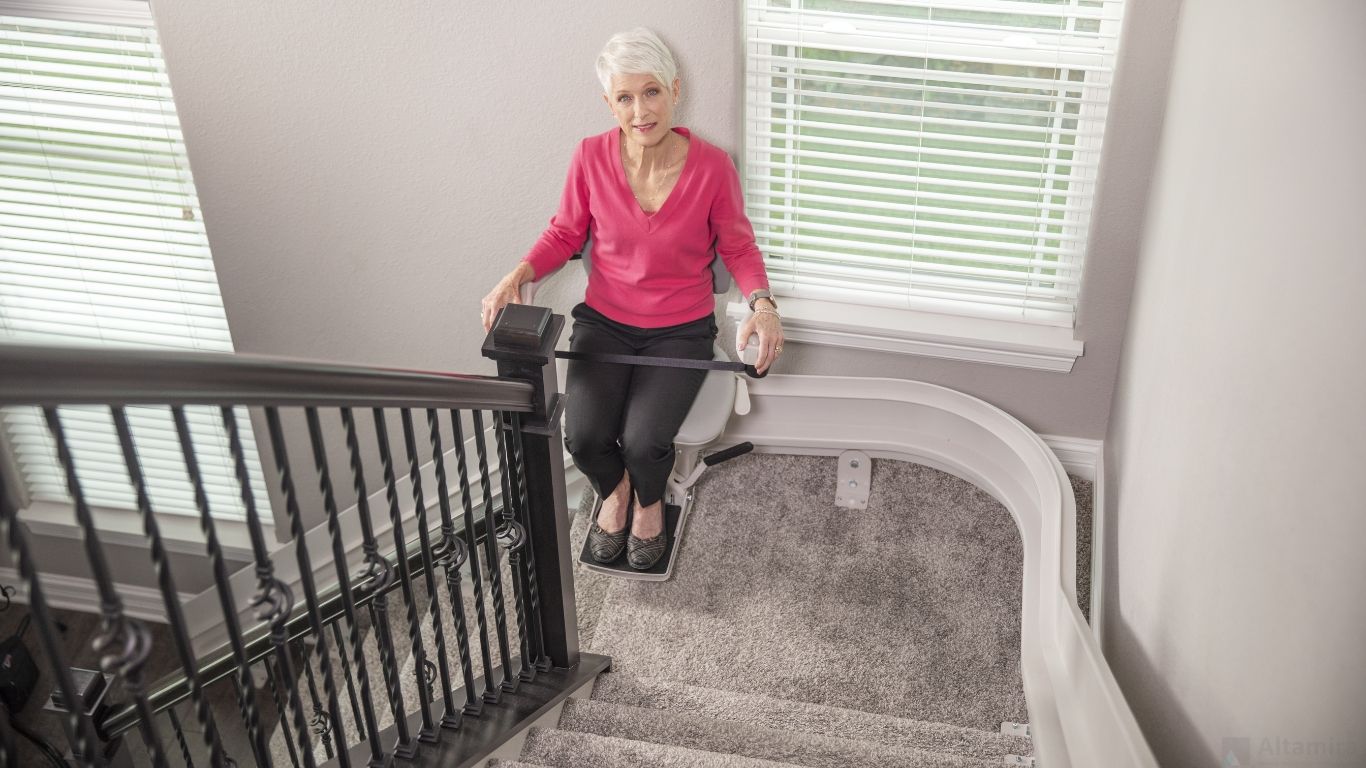
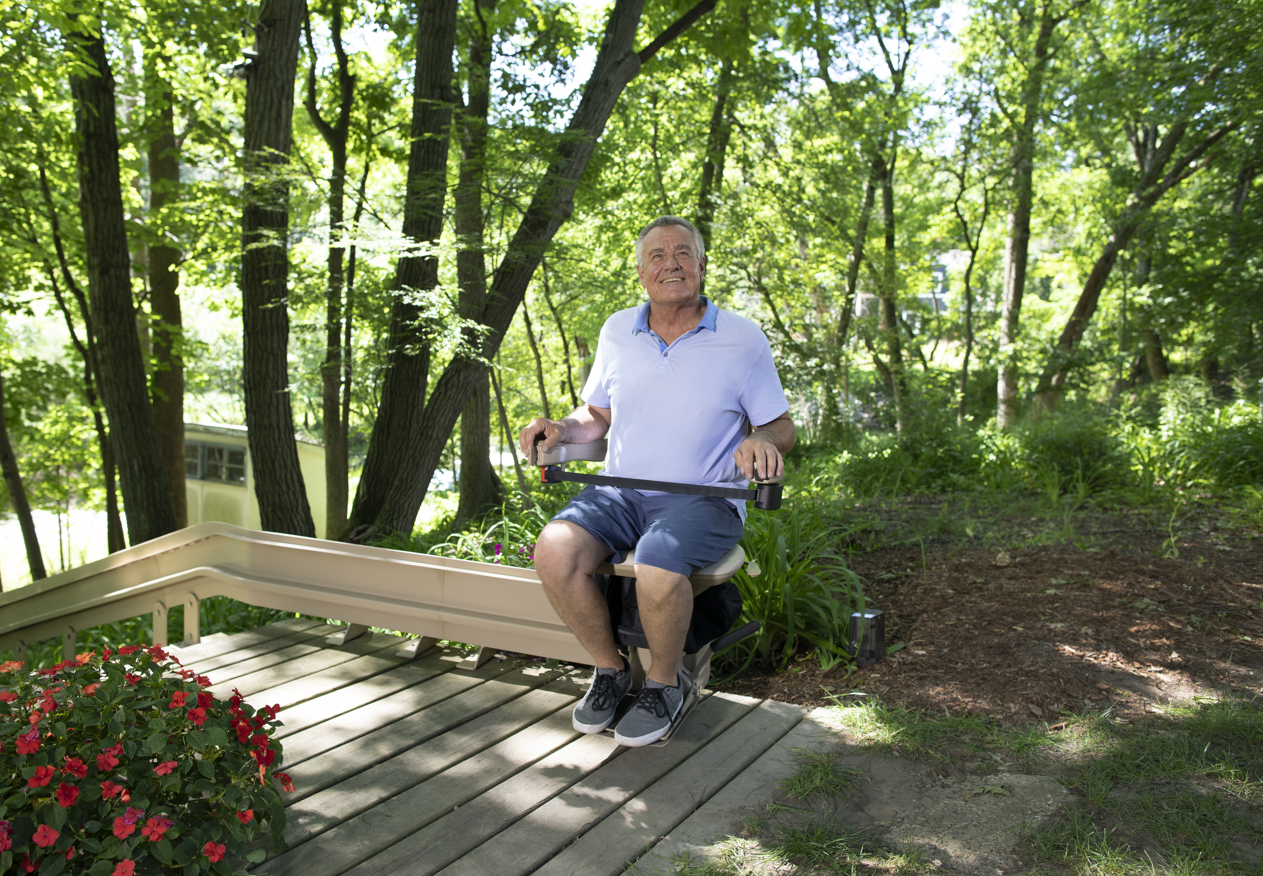
For many families, though, the safest answer is to take the stairs out of the equation. A stairlift carries your loved one up and down seated and secured, so the stairs no longer have to be walked at all — indoors or outside. Stairlifts are available in straight and curved models to fit almost any staircase, and features like a swivel seat and seatbelt add another layer of safety. For a caregiver, the peace of mind of knowing the stairs are no longer a daily hazard is hard to overstate.
Browse stairlift brochures → Watch stairlift videos →
The bathroom
The bathroom is one of the highest-risk rooms in any home, and even more so with dementia. Wet, hard surfaces and the transfers involved in bathing create real fall potential. The NIA recommends:
- Installing grab bars in the tub and shower — ideally in a color that contrasts with the wall so they're easier to see.
- Adding grab bars or a raised seat by the toilet.
- Using nonskid strips or mats in and around the tub.
- Locking away items like shampoo, lotion, and soap, which can look or smell like food to someone with dementia.
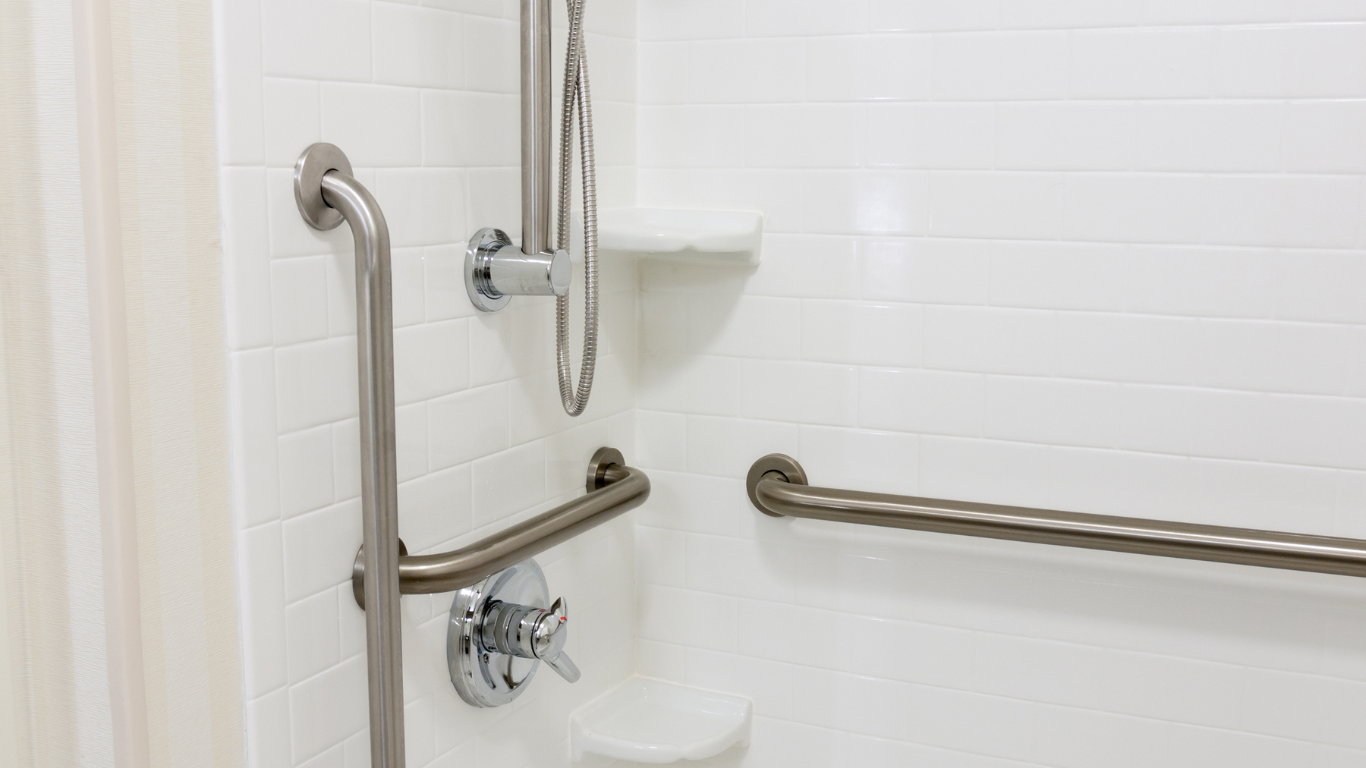
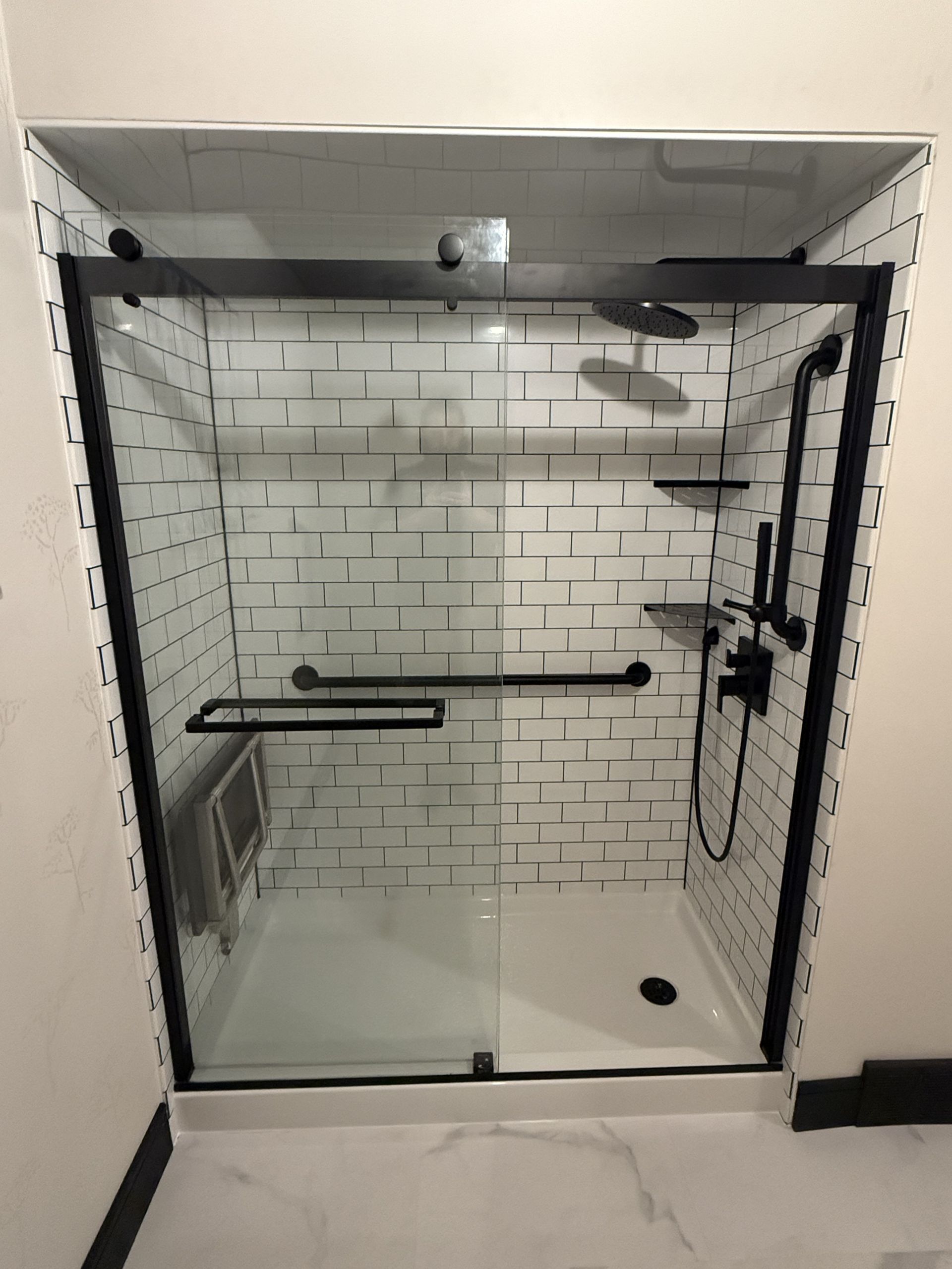
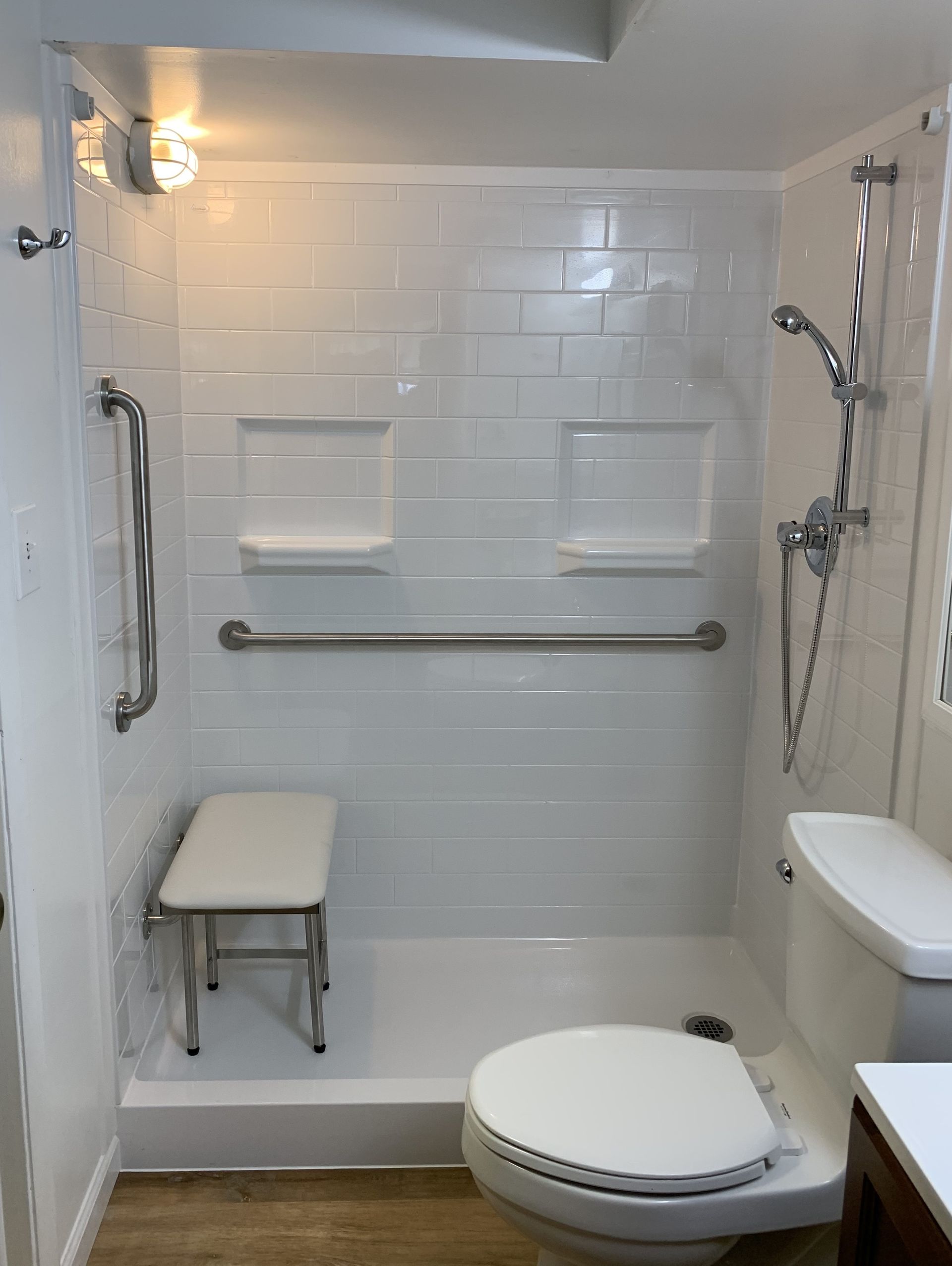
Beyond those add-ons, the layout itself can be made dramatically safer. A traditional tub is difficult and risky to climb into. A tub cut converts an existing tub into a low, step-through entry without a full remodel, while a broader bathroom modification can create a zero- or low-entry roll-in shower designed with safety in mind.
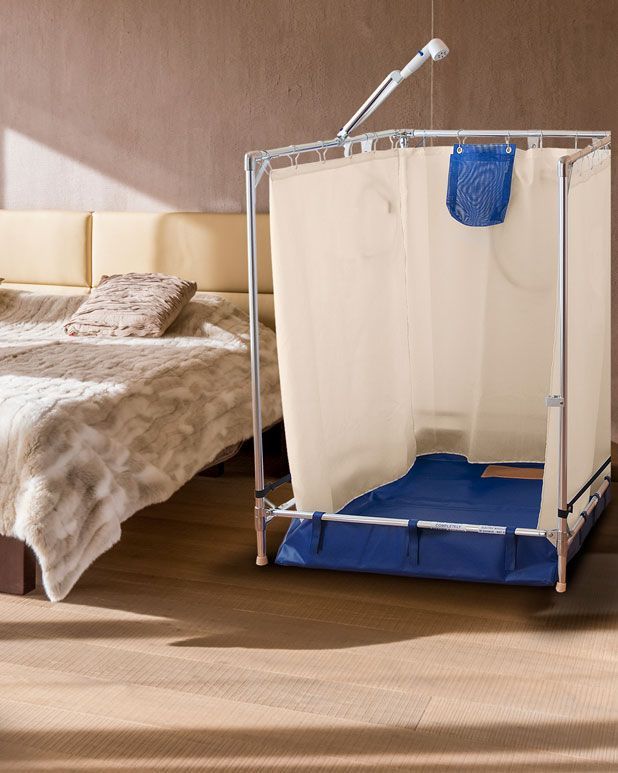
A portable roll-in shower is worth its own mention here. Altamira is a dealer for FAWSsit portable showers, which set up in under five minutes with no plumbing or electrical work. That matters beyond convenience — it means solving the tub-access problem without weeks of contractors and disruption in a home where routine and a familiar environment already carry extra weight. See our portable shower guide for details.
The bedroom
Nighttime carries its own risks, from disorientation to falls on the way to the bathroom. The NIA suggests using a room-monitoring device to alert you to sounds that might signal a fall, removing portable space heaters, and being cautious with electric blankets and heating pads. It also recommends installing bed rails and other transfer or mobility aids to make getting in and out of bed safer.
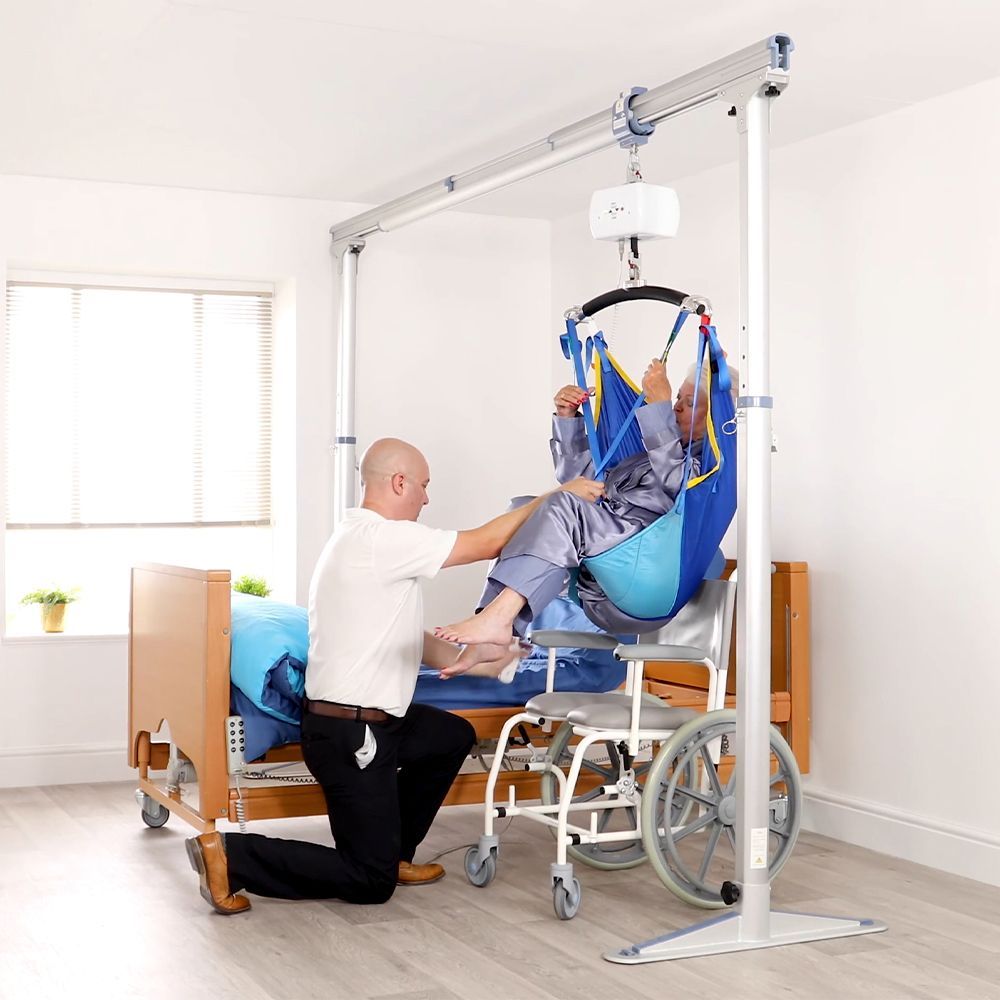
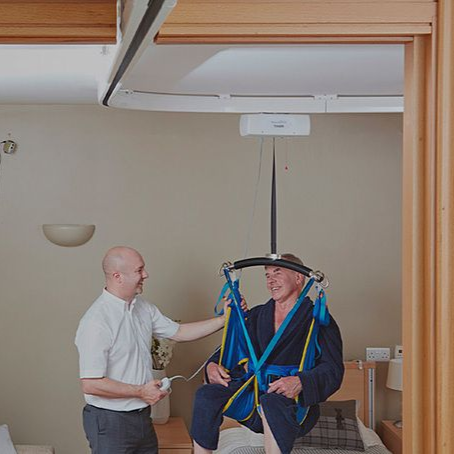
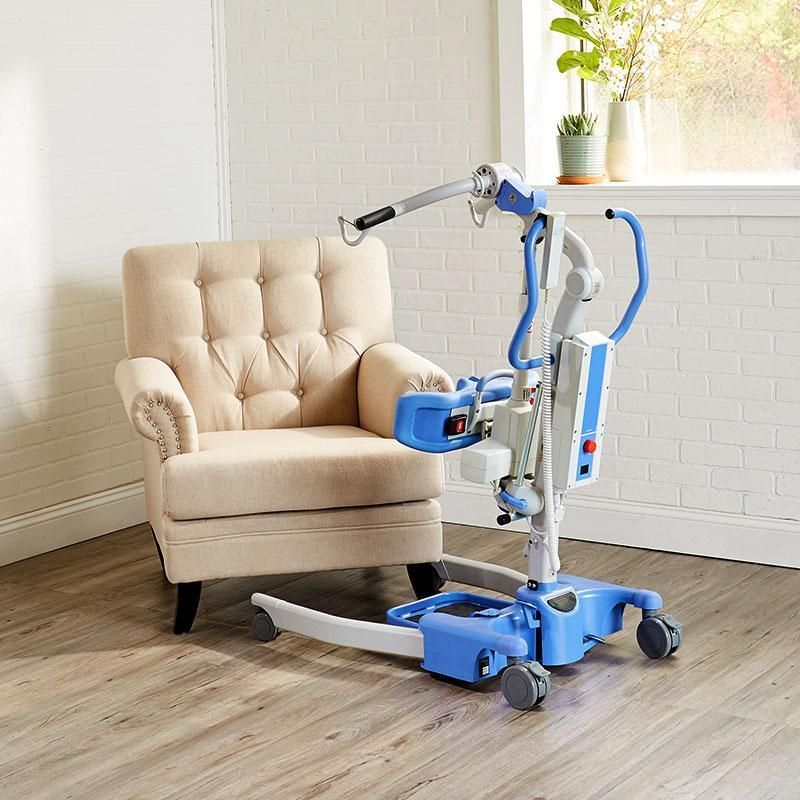
As dementia advances into later stages, safe transfers become one of the biggest physical challenges for caregivers. Manually lifting or repositioning another adult, day after day, is a well-known source of back and shoulder strain for caregivers. A patient lift — available in ceiling-mounted and portable models — makes moving a loved one between the bed, a chair, or the bathroom far safer for both the person and the caregiver, and takes that physical strain off the caregiver's body.
The kitchen
The kitchen holds appliances that get hot and items that can be mistaken for food. The NIA recommends adding safety knobs and an automatic shut-off to the stove, placing clear "Don't touch — very hot" signs near the oven and other hot surfaces, and removing artificial fruit or food-shaped magnets that might seem edible. Checking the refrigerator regularly for spoiled food is a simple habit that prevents illness.
Beyond the house: getting to appointments
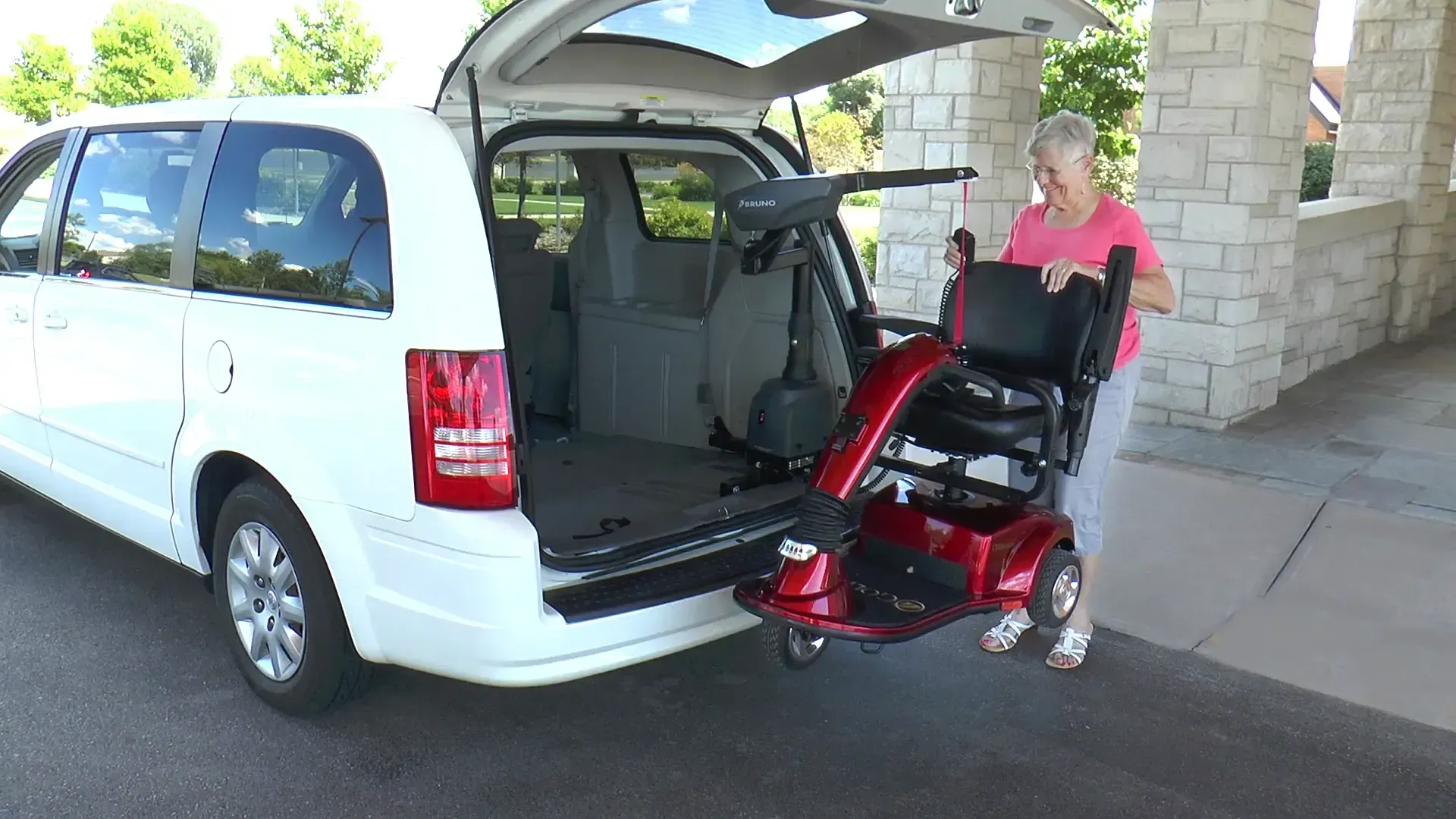
Home safety covers most of daily life, but dementia care still means regular trips out — doctor's visits, family gatherings, adult day programs. If your loved one uses a wheelchair or scooter, loading and unloading it from a vehicle every time adds one more physical task to a day that's already full of them. An automobile lift mounts to your vehicle and does the lifting for you, so getting out the door for an appointment doesn't have to be its own ordeal.
You don't have to figure it all out at once
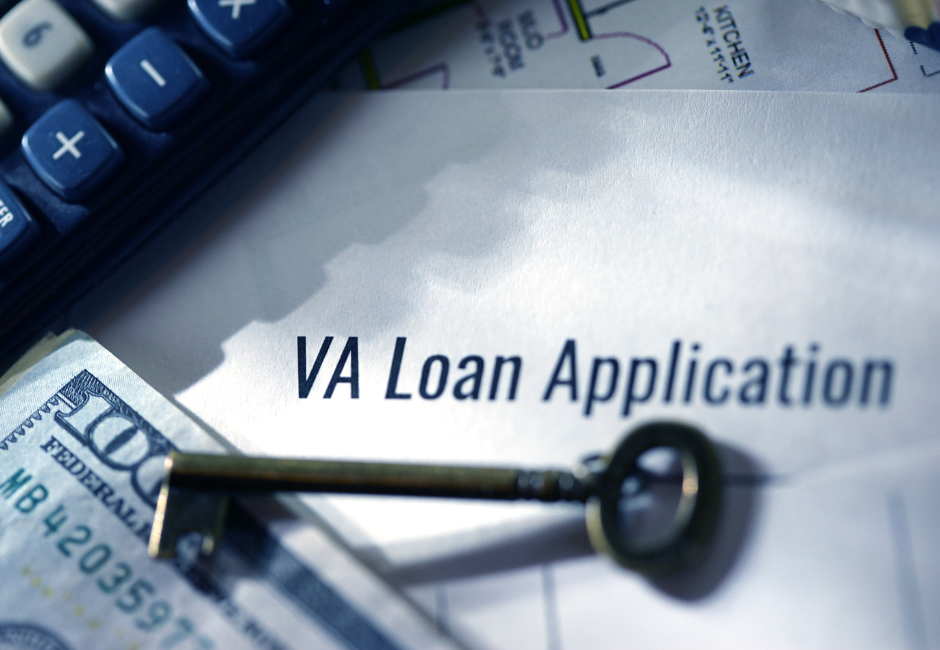
Dementia changes over time, and so will the home. Start with the most immediate dangers — loose railings, poor lighting, an unsafe staircase, a hard-to-enter bathroom — and add other changes as needs evolve. You also don't have to do it alone. Financial help for home safety updates may be available through state and community programs, and for eligible Veterans, the VA's HISA grant can help fund medically necessary changes — see our full funding guide for other options. If you're still in research mode, our free cost estimator and ramp calculator can help you get a sense of what's involved before you're ready to talk to anyone.
Talk it through with someone local
Altamira offers a free in-home assessment where a local mobility specialist walks through the home with you, identifies the barriers that matter most for your situation, and recommends solutions that fit your loved one's needs and your budget. As a Service-Disabled Veteran-Owned Small Business serving families across Pittsburgh, Indianapolis, Lexington, Henderson, Dayton, and Edison, we understand that these decisions are about far more than equipment — they're about helping someone you love stay safe in the home they know. No pressure, no obligation.