
There is usually a moment when a family caregiver realizes the transfers have stopped being safe. A near-miss getting Dad from the bed to his wheelchair. A back that hurts for two days after a shower. The quiet math of "what happens if I drop her?" A patient lift is the answer to that moment, but the first time you search for one you run into four different kinds of equipment and a brand name that everyone uses to mean all of them. This guide sorts it out.
That is the maximum weight a caregiver should lift manually during patient handling, according to research using the NIOSH lifting equation and cited by OSHA, and it assumes ideal conditions. Nearly every human transfer exceeds it. Nursing assistants experience musculoskeletal injuries at about six times the rate of other industries, and roughly half of nurses report back pain after repositioning tasks. Family caregivers face the same forces, usually without any training.
First, a naming note: "Hoyer lift" is a brand
Hoyer is a brand owned by Joerns Healthcare. The original Hoyer was a floor-based lift on wheels that raised a person in a fabric sling, and it worked so well for so long that the name became shorthand for the whole category, the way people say Kleenex or Band-Aid. Today "patient lift" is the umbrella term, and under it sit four distinct types. Altamira carries Joerns Hoyer floor and sit-to-stand lifts and Mackworth ceiling and gantry systems, so we see all four in homes every week.
Floor (mobile) lift
The classic Hoyer. A wheeled base, a mast, a boom, and a sling. Rolls from room to room. Manual hydraulic or battery powered.
Ceiling lift
A motor that runs along a track mounted to the ceiling. Uses no floor space and can carry someone from bed to bathroom on one track.
Freestanding gantry
An overhead lift on a portable frame that stands on its own feet. Overhead lifting without mounting anything to the house.
Sit-to-stand lift
Helps a person who can still bear some weight rise from sitting to standing. Faster for toileting and keeps the legs working.
Floor lifts: the classic Hoyer
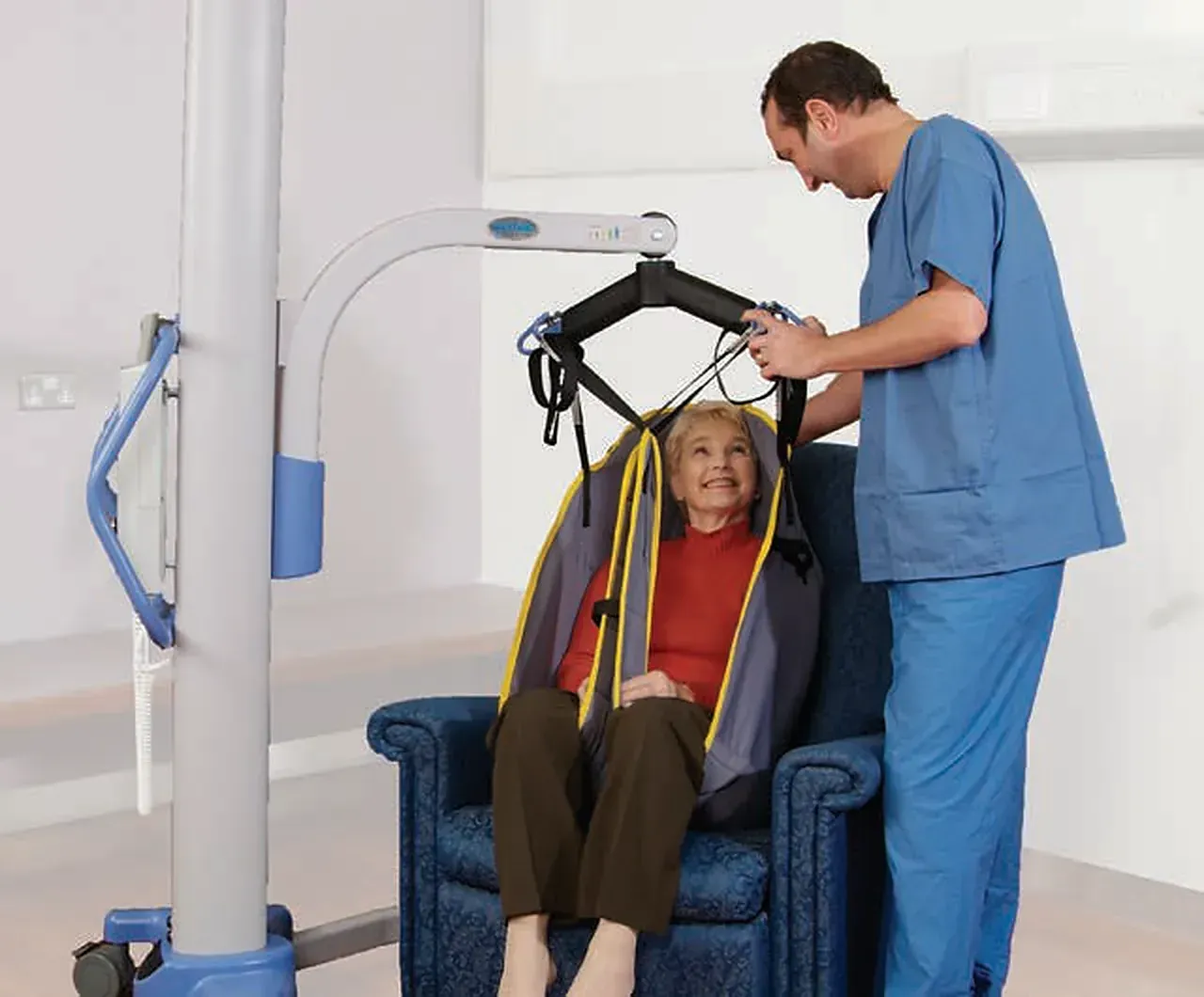
A floor lift is what most people picture. The base has two legs on casters that spread apart to straddle a chair or slide under a bed. A mast rises from the base, a boom reaches out over the person, and a sling hooks onto a spreader bar at the end of the boom. Pump a handle (manual) or press a button (powered), and the person is lifted clear of the surface, wheeled to the destination, and lowered.
The appeal is flexibility. Nothing is installed. The same lift serves the bedroom, the living room, and a floor recovery after a fall. If the person moves, the lift moves with them.
The trade-off is floor space and effort. The base needs room to open around furniture, doorways need to be wide enough for the lift to pass, and carpet adds rolling resistance. A caregiver still pushes a loaded lift, which is why Joerns builds features like a low base that clears 5.5 inches under a bed and a push pad that lets you start the roll with your foot instead of your back.
The Hoyer floor lifts we install
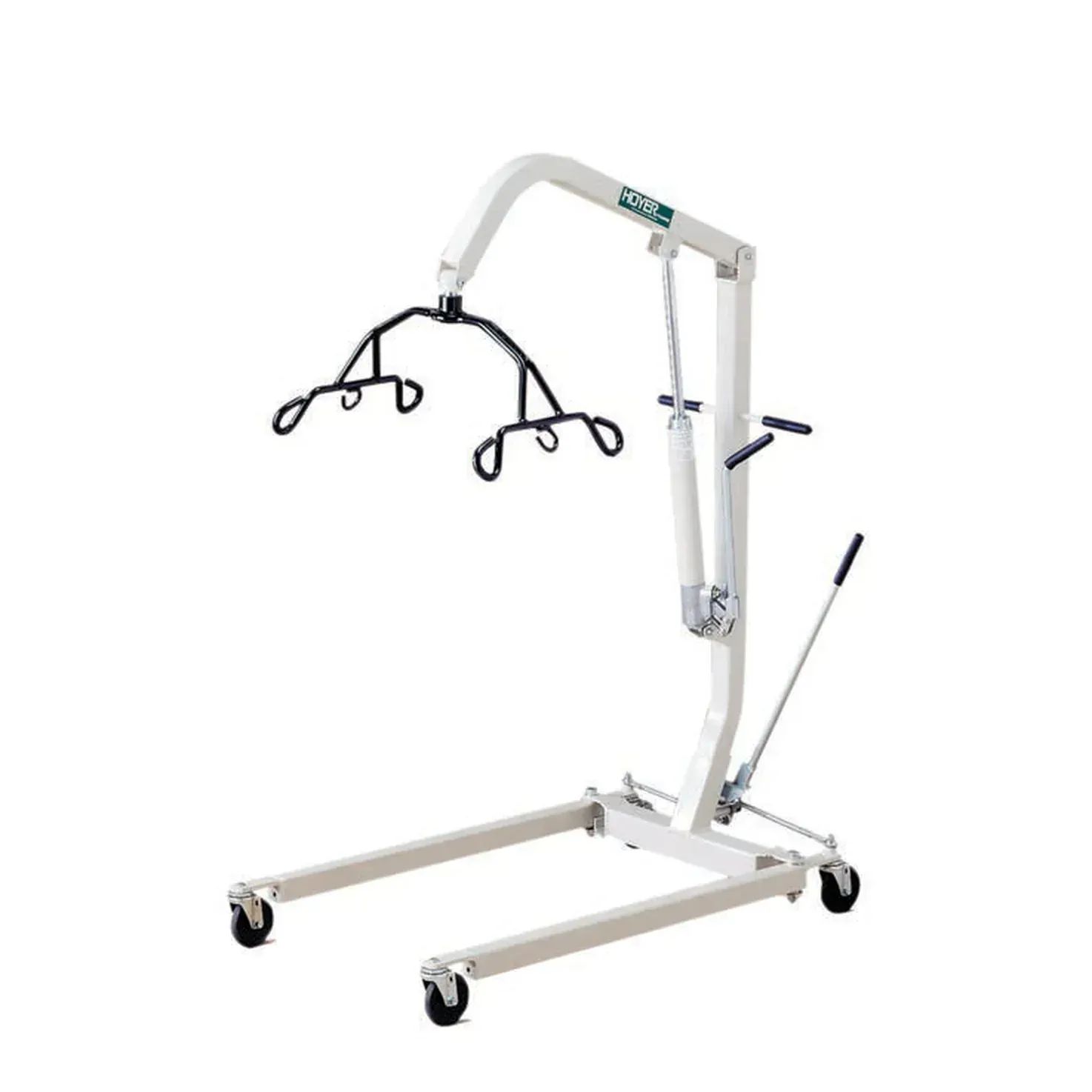 Hoyer HML400
Manual hydraulic. 400 lb safe working load. Rotating pump handle works from either side. Disassembles for storage or travel.
Most popular for home care
Hoyer HML400
Manual hydraulic. 400 lb safe working load. Rotating pump handle works from either side. Disassembles for storage or travel.
Most popular for home care
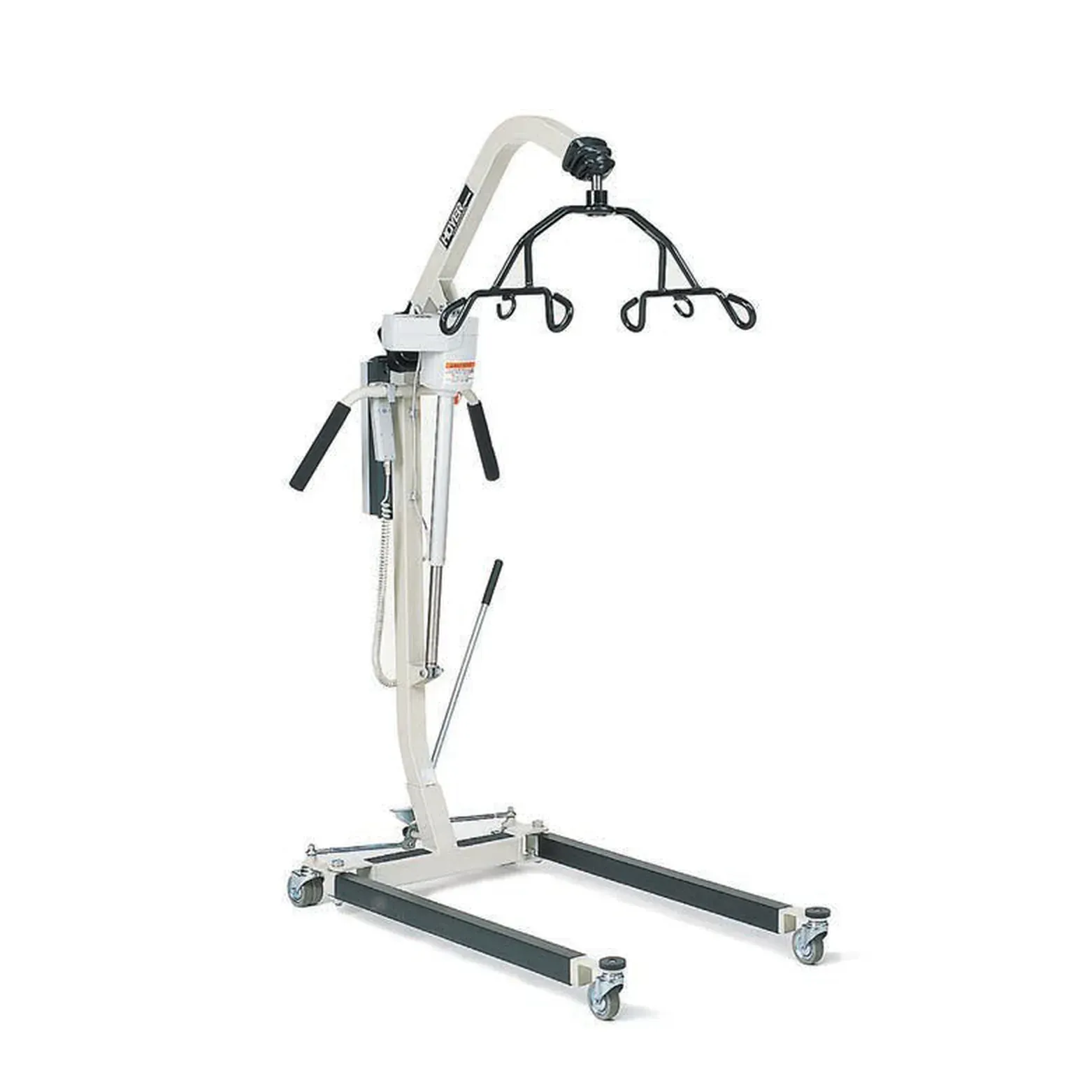 Hoyer HPL402
Powered version of the HML400. 400 lb. Mechanical release lever lowers the person if power is lost. 5.5-inch base clearance.
Powered
Hoyer HPL402
Powered version of the HML400. 400 lb. Mechanical release lever lowers the person if power is lost. 5.5-inch base clearance.
Powered
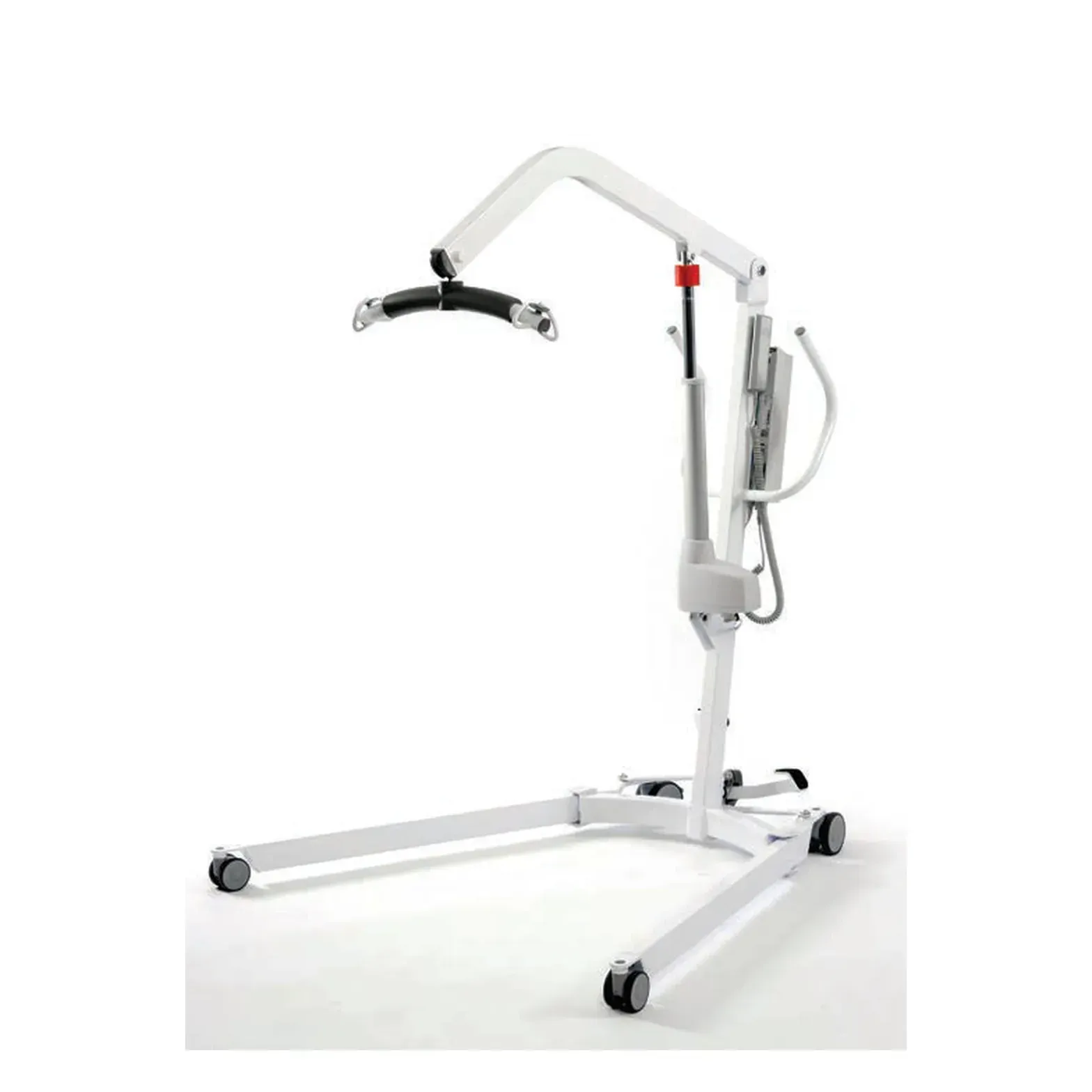 Hoyer HPL450
450 lb. Powered boom with a choice of manual or powered leg spread. Optional scale weighs the person during the transfer.
Powered
Hoyer HPL450
450 lb. Powered boom with a choice of manual or powered leg spread. Optional scale weighs the person during the transfer.
Powered
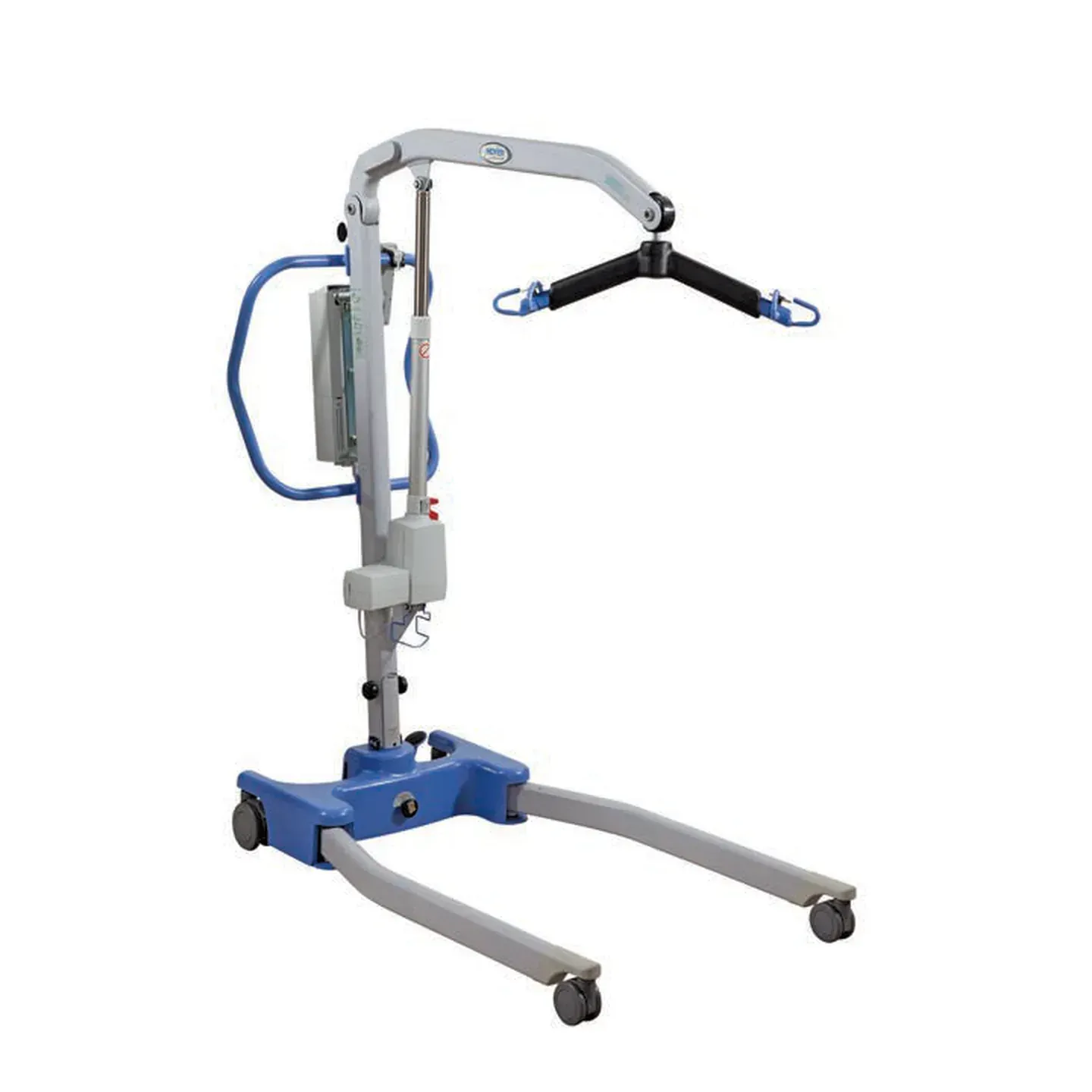 Hoyer Advance
340 lb. Folds without tools and fits in a car trunk. Angled legs get close to wide recliners and wheelchairs.
Compact and portable
Hoyer Advance
340 lb. Folds without tools and fits in a car trunk. Angled legs get close to wide recliners and wheelchairs.
Compact and portable
Higher-capacity floor lifts
Weight capacity is not something to round up on. If the person is near or above 400 lb, there are lifts built for it, with wider open cradles, twin front casters for stability over thresholds, and push handles sized for two caregivers.
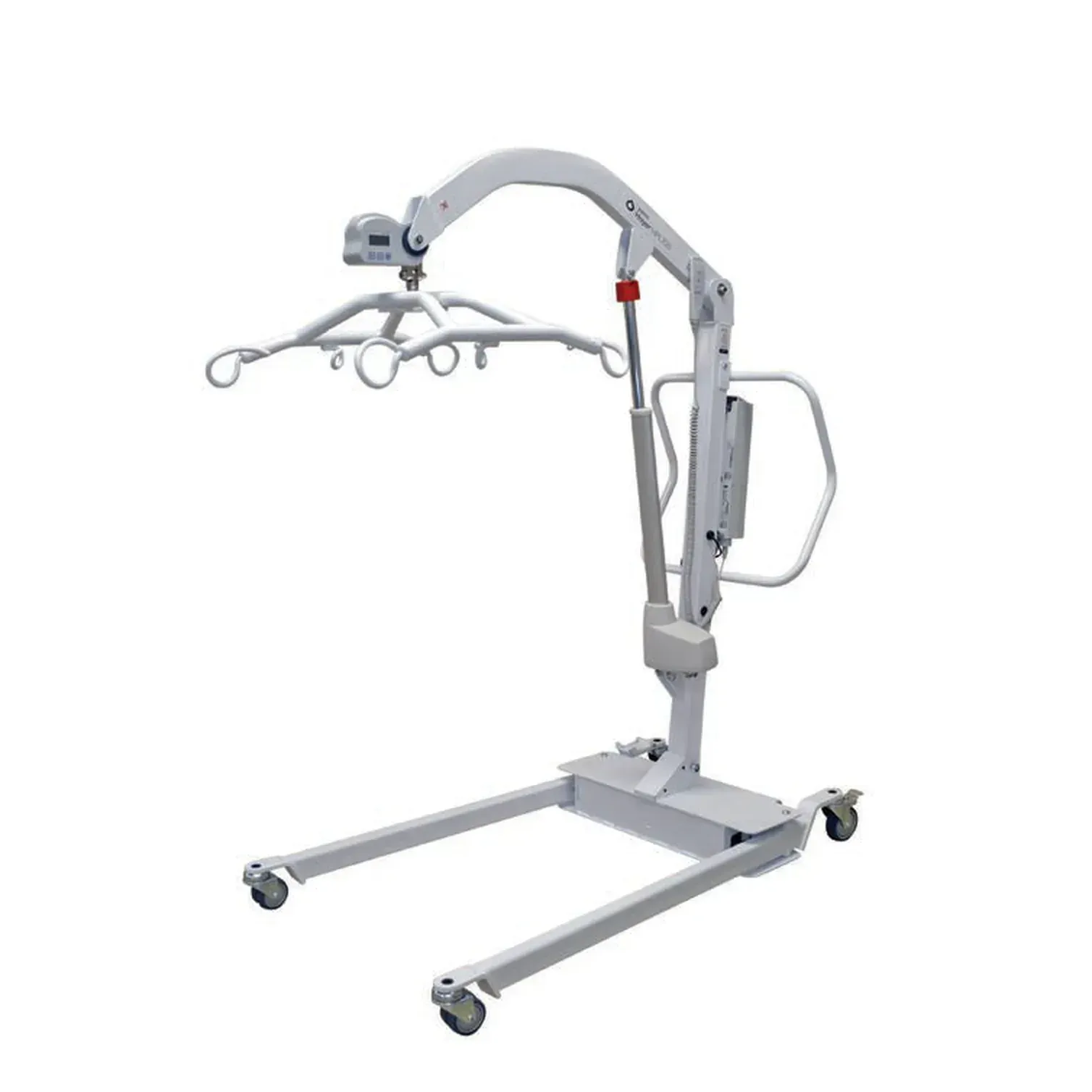 Hoyer HPL700
700 lb. Powered base, interchangeable cradles for bariatric and standard slings, optional integrated scale, Smart Monitor with overload protection.
Hoyer HPL700
700 lb. Powered base, interchangeable cradles for bariatric and standard slings, optional integrated scale, Smart Monitor with overload protection.
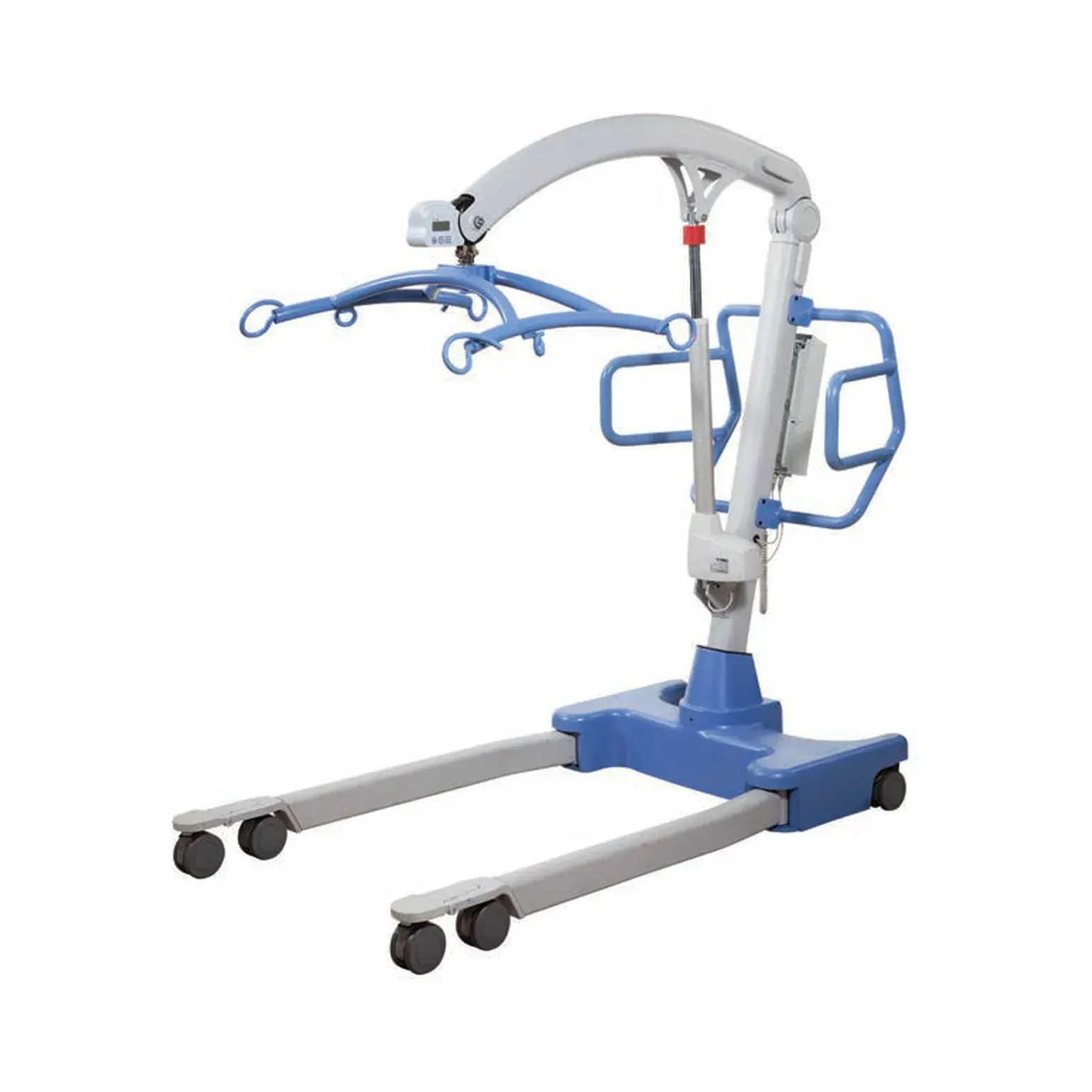 Hoyer Calibre
850 lb. Wide wrap-around handle for more than one caregiver, six-point cradle, built-in scale, powered leg adjustment.
Hoyer Calibre
850 lb. Wide wrap-around handle for more than one caregiver, six-point cradle, built-in scale, powered leg adjustment.
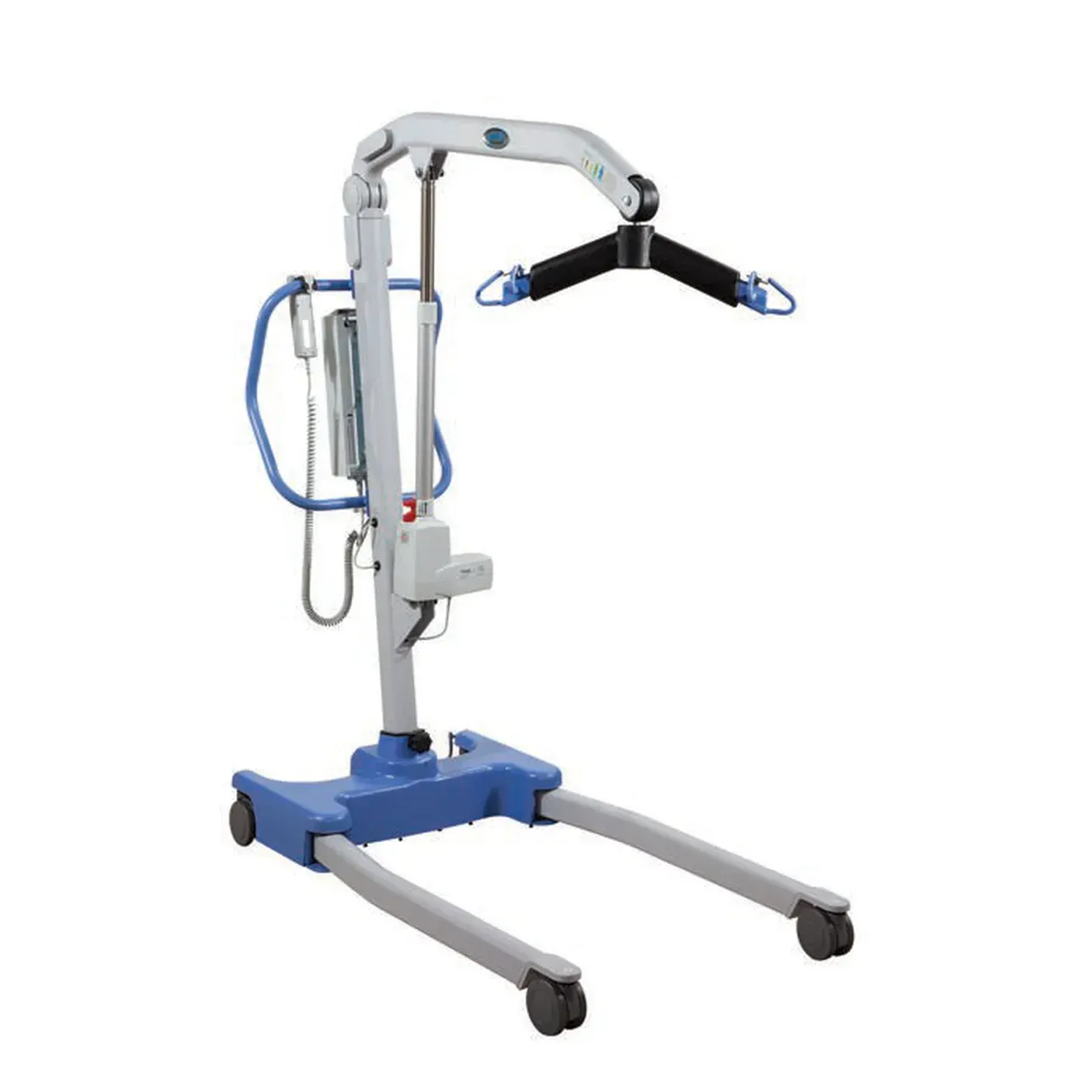 Hoyer Presence
500 lb. Lightweight at 88 lb total, with an extensive lifting range for off-the-floor pickups and high beds.
Hoyer Presence
500 lb. Lightweight at 88 lb total, with an extensive lifting range for off-the-floor pickups and high beds.
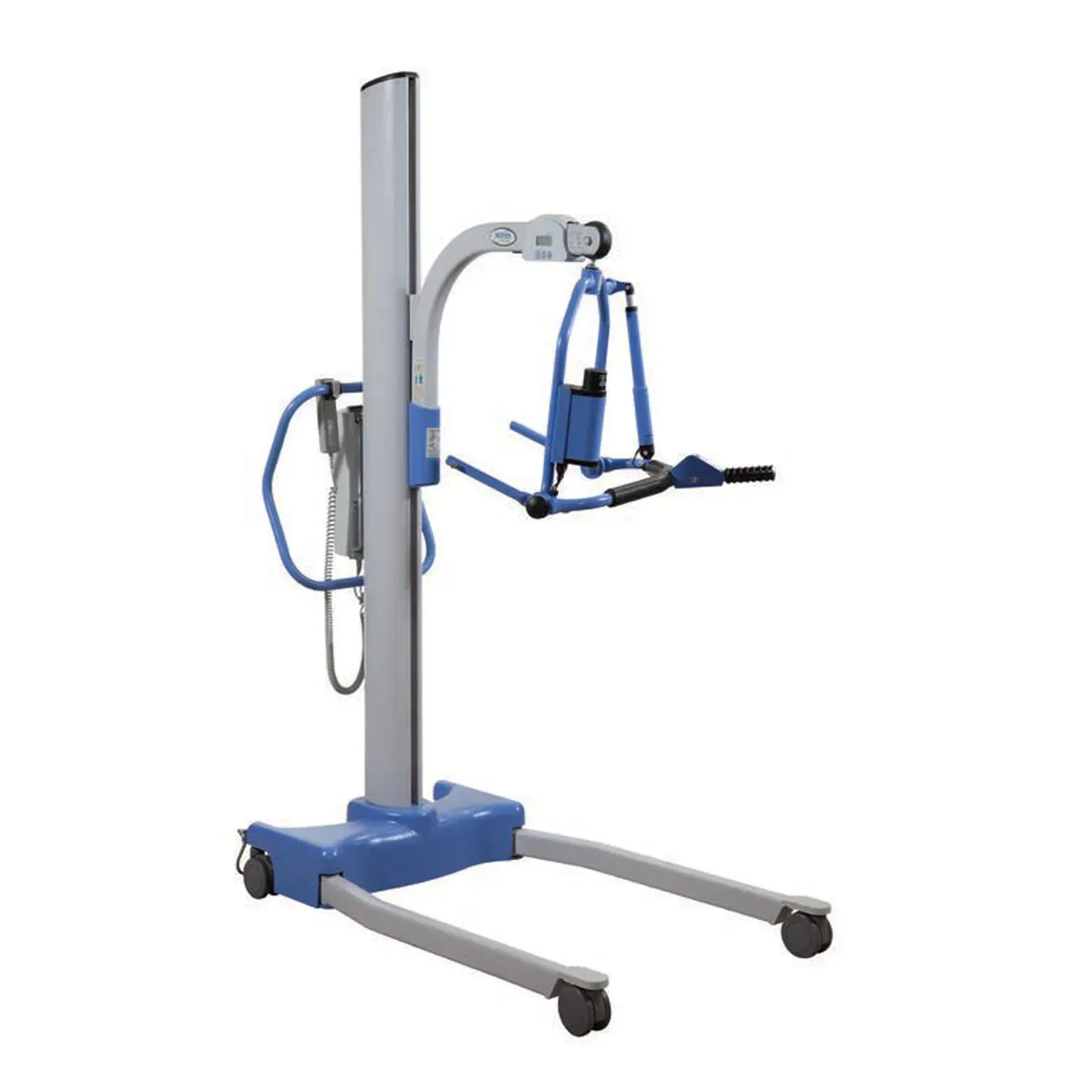 Hoyer Stature
500 lb. Vertical-lift mast keeps the person close to the lift and reaches across today's wider beds.
Hoyer Stature
500 lb. Vertical-lift mast keeps the person close to the lift and reaches across today's wider beds.
- Transfers happen in more than one room
- You may need to lift someone from the floor
- You rent, or want nothing installed
- The need may be temporary or the person may move
- Doorways are 30 inches or wider and floors are mostly hard surface
- The bedroom or bathroom is tight and the base cannot open
- The bathroom is the main transfer destination (most floor lifts will not fit around a toilet or into a shower)
- The caregiver has back, shoulder, or strength limitations of their own
- Thick carpet makes pushing a loaded lift hard
Ceiling lifts: the overhead option
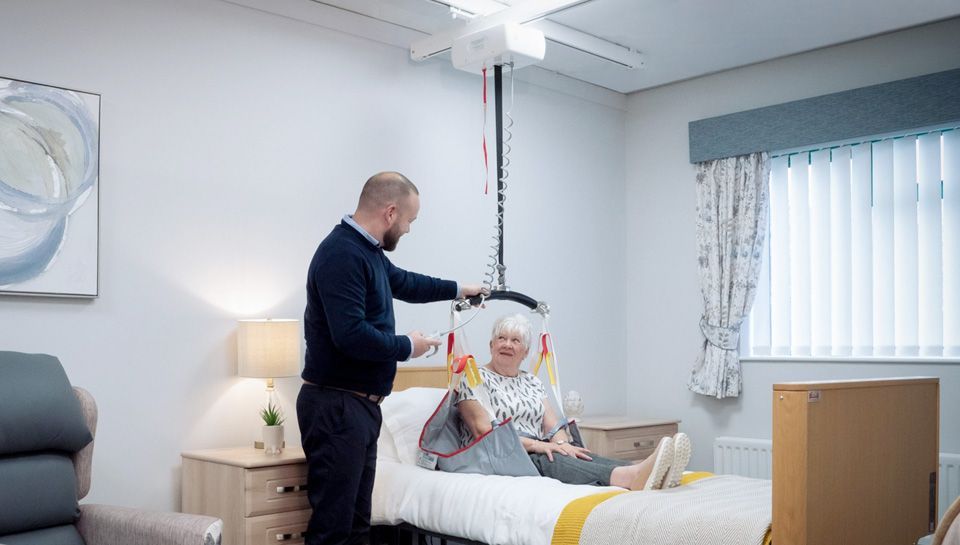
A ceiling lift moves the lifting mechanism off the floor and onto a track. The motor unit hangs from a trolley on the track, the sling hangs from the motor, and the person travels along the track from one point to another. There is nothing to push, nothing to steer around furniture, and nothing on the floor to trip over between transfers.
For bathrooms in particular this is a different world. A straight track from the bed through the doorway to the toilet or shower turns a two-person, three-step transfer into one smooth movement. Mackworth's fixed system, the TX Advanced, is rated to 600 lb and is available with manual traverse (you guide the person along the track by hand) or powered traverse (the motor drives along the track from the handset).
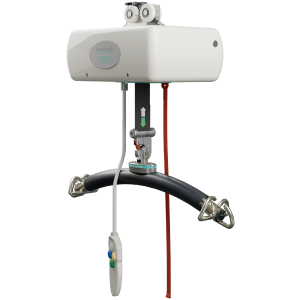 Mackworth TX Advanced
Fixed ceiling track lift. 600 lb. Manual or powered traverse. Suited to wet rooms and bathrooms.
Fixed track
Mackworth TX Advanced
Fixed ceiling track lift. 600 lb. Manual or powered traverse. Suited to wet rooms and bathrooms.
Fixed track
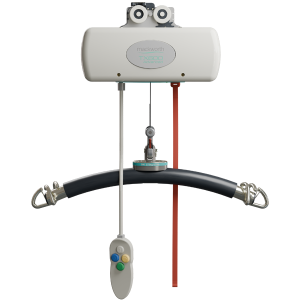 TX Advanced, front
LCD display, handset control, and a curved carry bar that keeps the sling loops clear of the person's face.
TX Advanced, front
LCD display, handset control, and a curved carry bar that keeps the sling loops clear of the person's face.
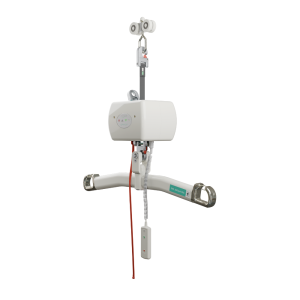 Mackworth CPP
Portable lift motor. 440 lb. Under 16 lb, so one caregiver can move it between tracks or onto a gantry. About 35 full lifts per charge.
Portable
Mackworth CPP
Portable lift motor. 440 lb. Under 16 lb, so one caregiver can move it between tracks or onto a gantry. About 35 full lifts per charge.
Portable
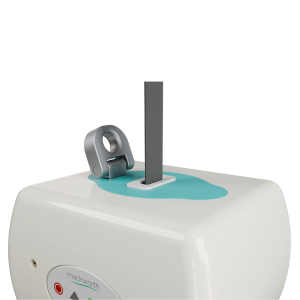 CPP transition hook
Lets the caregiver pass the person from one room's track to the next through a doorway without taking them out of the lift.
CPP transition hook
Lets the caregiver pass the person from one room's track to the next through a doorway without taking them out of the lift.
Fixed track vs. portable motor
With a fixed system, the motor lives on the track permanently and is always charged and ready. With a portable motor like the Mackworth CPP, you install tracks in the rooms you need and carry one lightweight motor between them. The CPP is compatible with five track profiles and with Mackworth's gantries, and an optional transition hook lets it cross a door header from one track to another with the person still in the sling. Both approaches are designed for indoor use.
- The bathroom is part of the daily routine
- Space is tight and a floor lift cannot open its legs
- The need is long-term and the person is staying in the home
- One caregiver handles most transfers alone
- You want the equipment out of sight between uses
- You rent and cannot modify the ceiling
- The ceiling structure cannot take a track without reinforcement (we check this at the assessment)
- The person needs to be lifted in rooms with no track
- The need is likely to last months rather than years
The option most families do not know about: the freestanding gantry
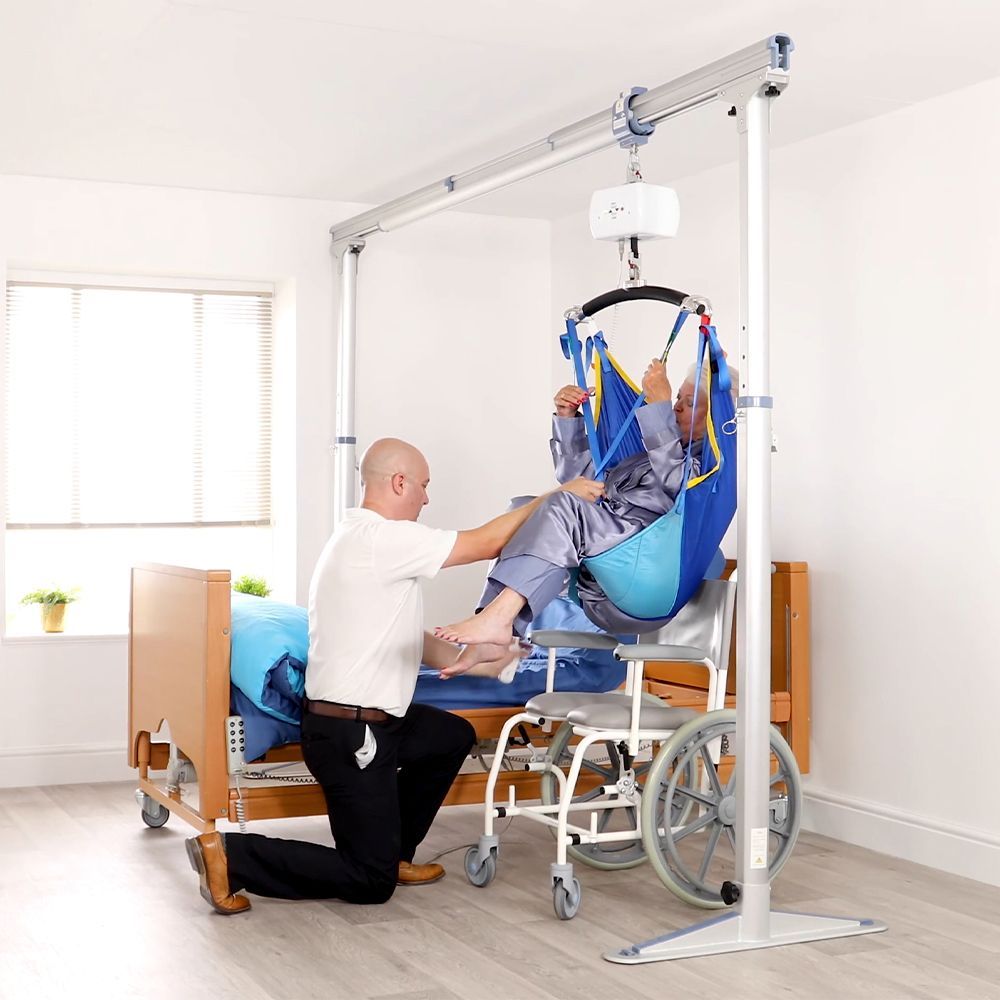
A gantry is a portable frame, two uprights and a crossbar, that stands on its own feet and carries a track. The portable lift motor rides on that track exactly as it would on a ceiling. You get the overhead-lift experience, nothing to push and nothing to steer, without mounting anything to walls, ceiling, or floor.
Mackworth designs the FSG to go together without tools and to be assembled by one person. It is aluminum, weighs under 50 lb, is rated to 440 lb, and adjusts in height from about 84 to 99 inches with adjustable width, so it sets up over most beds and recliners. Mackworth lists an expected lifetime of ten years for both the gantry and the CPP motor. The Easy Fit 440 is a similar tool-free gantry with the same 440 lb rating.
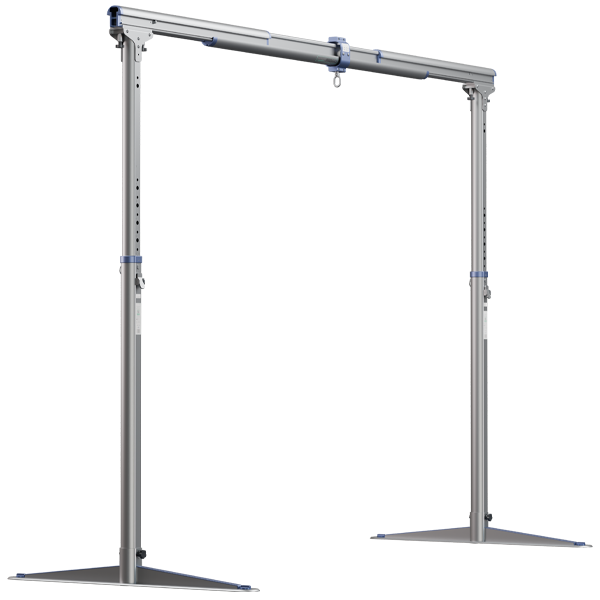 Mackworth FSG
Freestanding gantry. 440 lb. Aluminum, under 50 lb. Tool-free assembly by one person. Height and width adjustable.
No mounting
Mackworth FSG
Freestanding gantry. 440 lb. Aluminum, under 50 lb. Tool-free assembly by one person. Height and width adjustable.
No mounting
 FSG, front
Internal clearance adjusts from about 83 to 120 inches, so it spans a bed with room for a wheelchair beside it.
FSG, front
Internal clearance adjusts from about 83 to 120 inches, so it spans a bed with room for a wheelchair beside it.
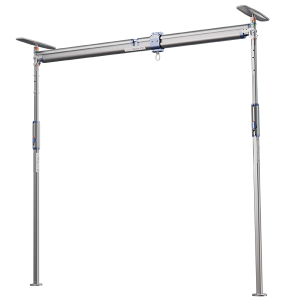 Mackworth Easy Fit 440
Tool-free gantry. 440 lb safe working load. Pairs with the CPP portable motor for home care.
No mounting
Mackworth Easy Fit 440
Tool-free gantry. 440 lb safe working load. Pairs with the CPP portable motor for home care.
No mounting
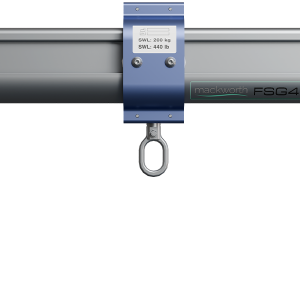 Gantry trolley
The CPP clips to this trolley with a quick-release hook and glides along the crossbar.
Gantry trolley
The CPP clips to this trolley with a quick-release hook and glides along the crossbar.
Who this is for: renters, families in apartments or older homes with plaster ceilings, anyone unsure how long the need will last, and hospice situations where equipment needs to go in this week and come out cleanly later. It is also a smart first step when a ceiling track is the long-term plan but the assessment or funding is still in progress.
Sit-to-stand lifts: when the person can still bear weight
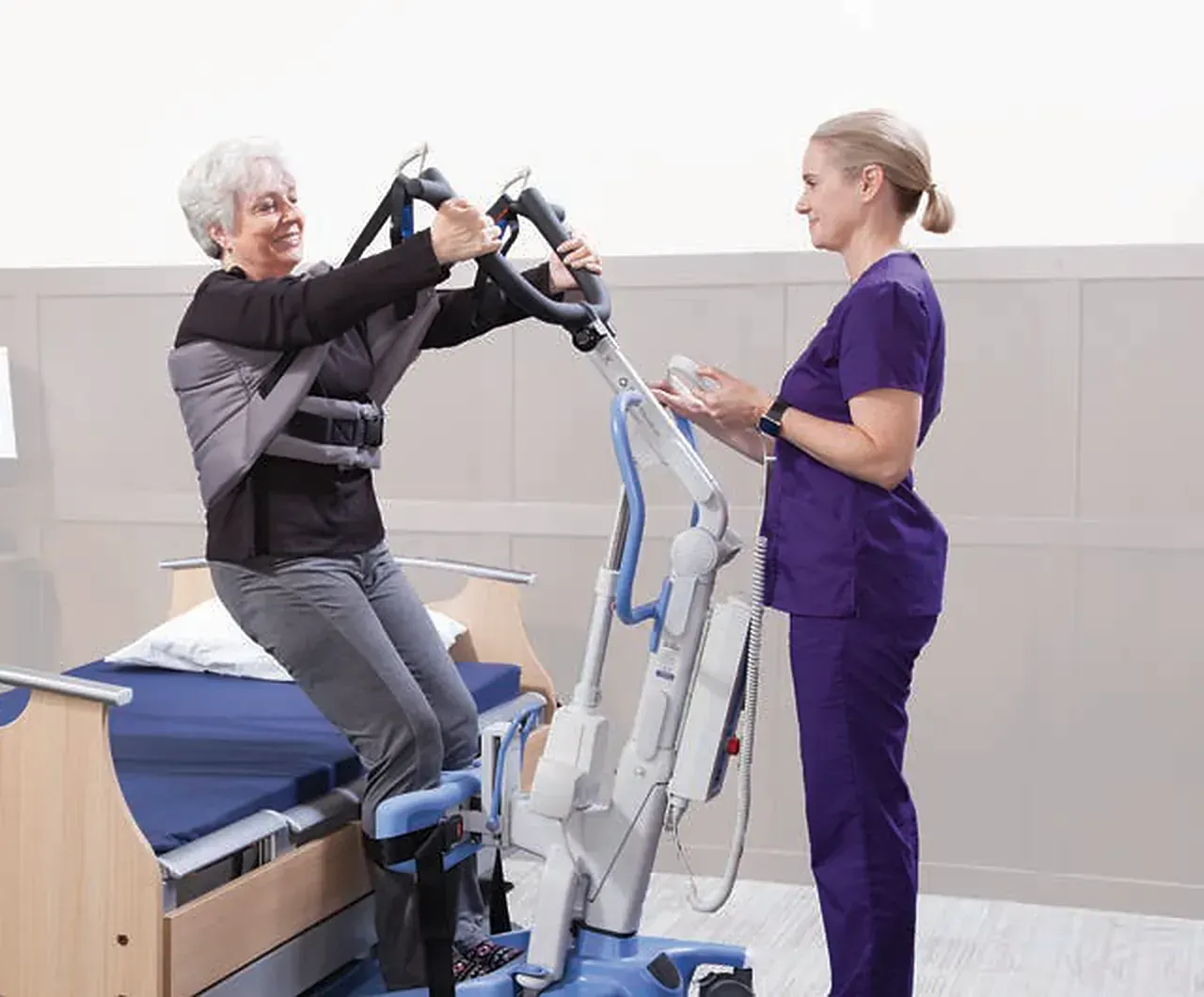
The lifts above are passive: the person does nothing and the equipment does everything. A sit-to-stand lift (Joerns calls them stand-aid lifts) is active. The person places their feet on a footplate, their knees against a padded block, holds a handle, and a short sling around the back does the rest of the work of standing them up. From there they can be wheeled to a toilet or chair and lowered.
This matters for two reasons. It is much faster for toileting, because clothing can be adjusted while the person is upright. And it keeps the legs and trunk involved, which therapists like because it preserves whatever standing ability the person has. It only works for someone who can bear some weight, follow simple instructions, and grip the handle.
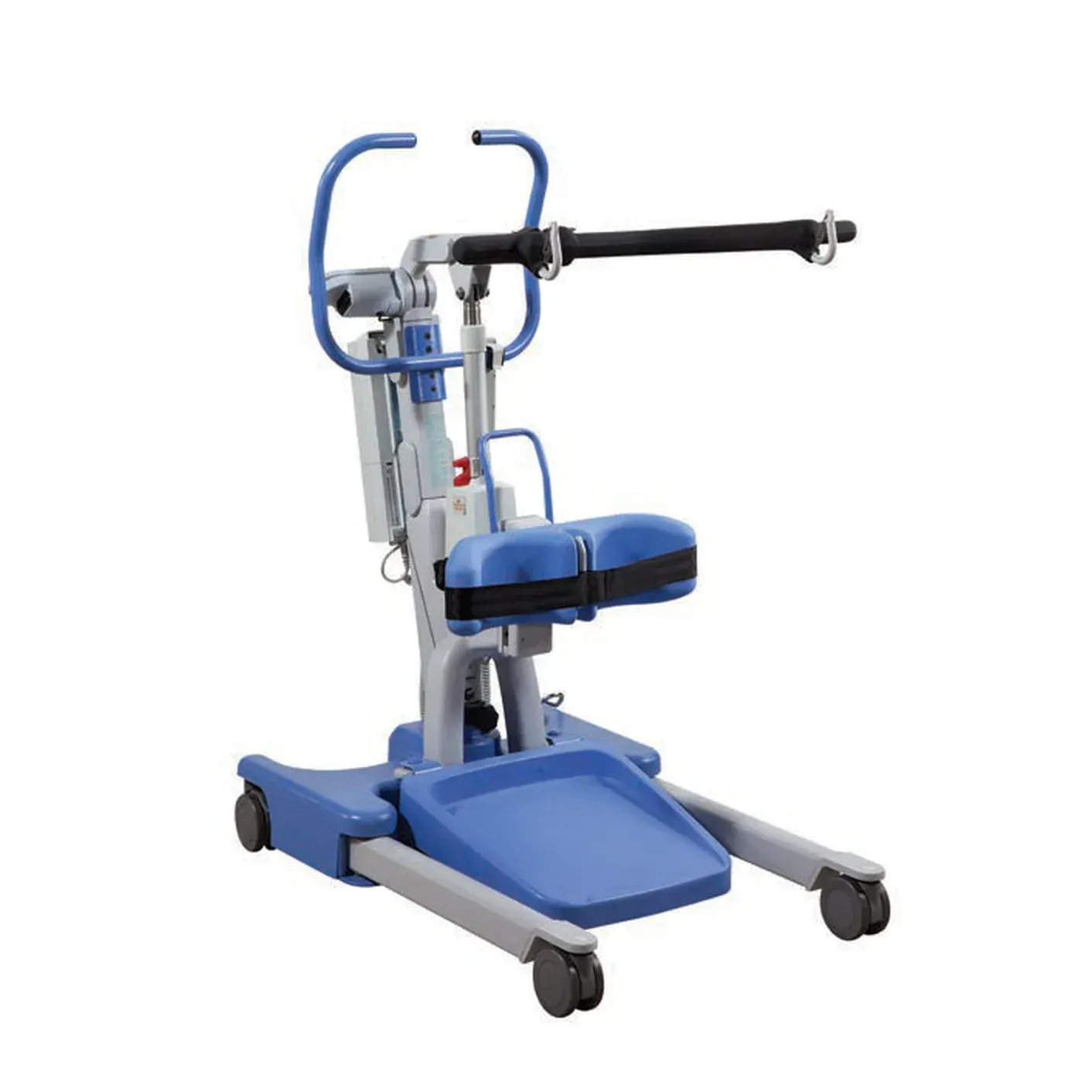 Hoyer Elevate
440 lb. Powered, with removable footrest so the person can practice standing and walking under supervision. Optional scale.
Powered
Hoyer Elevate
440 lb. Powered, with removable footrest so the person can practice standing and walking under supervision. Optional scale.
Powered
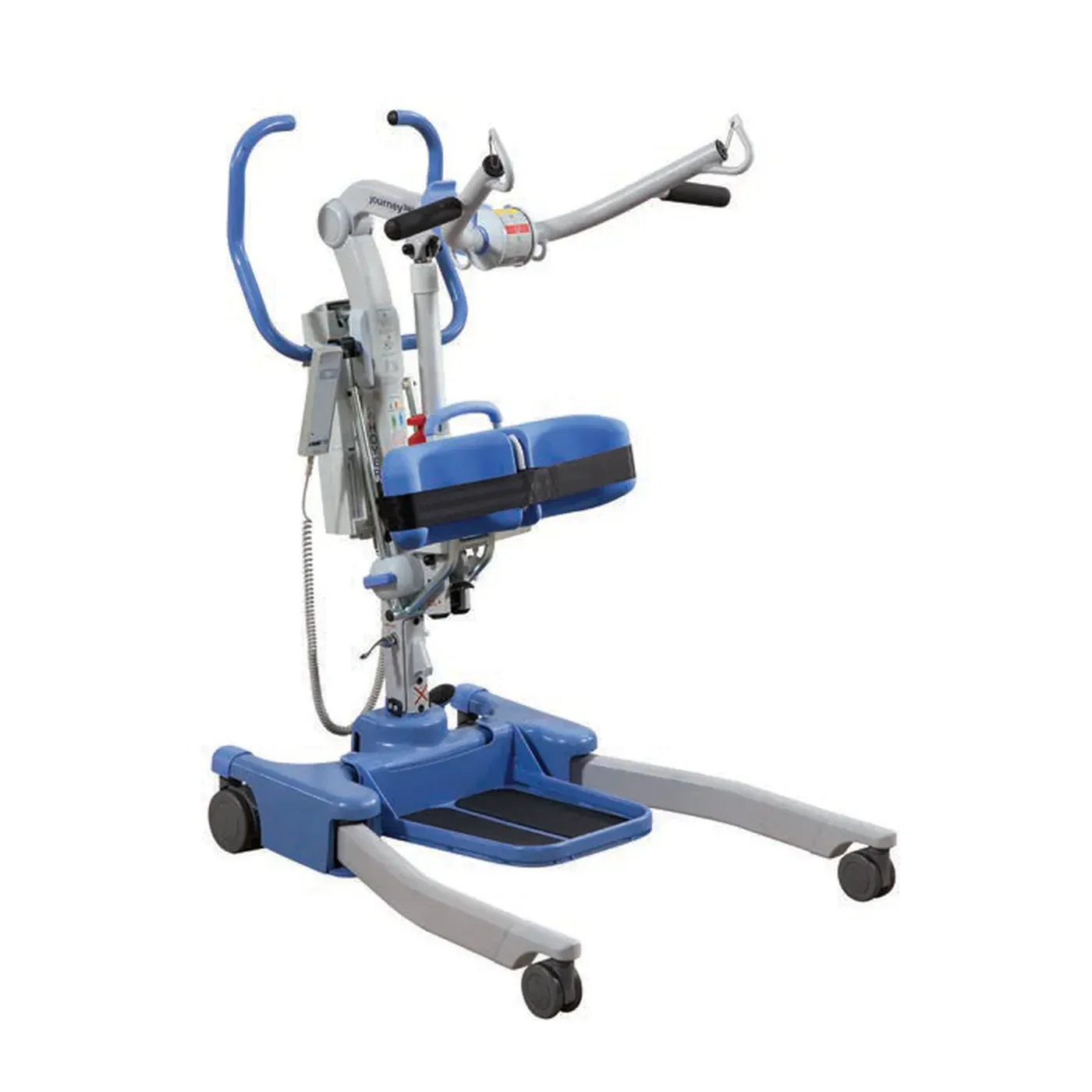 Hoyer Journey
340 lb. Ultra-compact and folds for storage or the car. Adjustable cradle fits a wide range of heights.
Compact and portable
Hoyer Journey
340 lb. Ultra-compact and folds for storage or the car. Adjustable cradle fits a wide range of heights.
Compact and portable
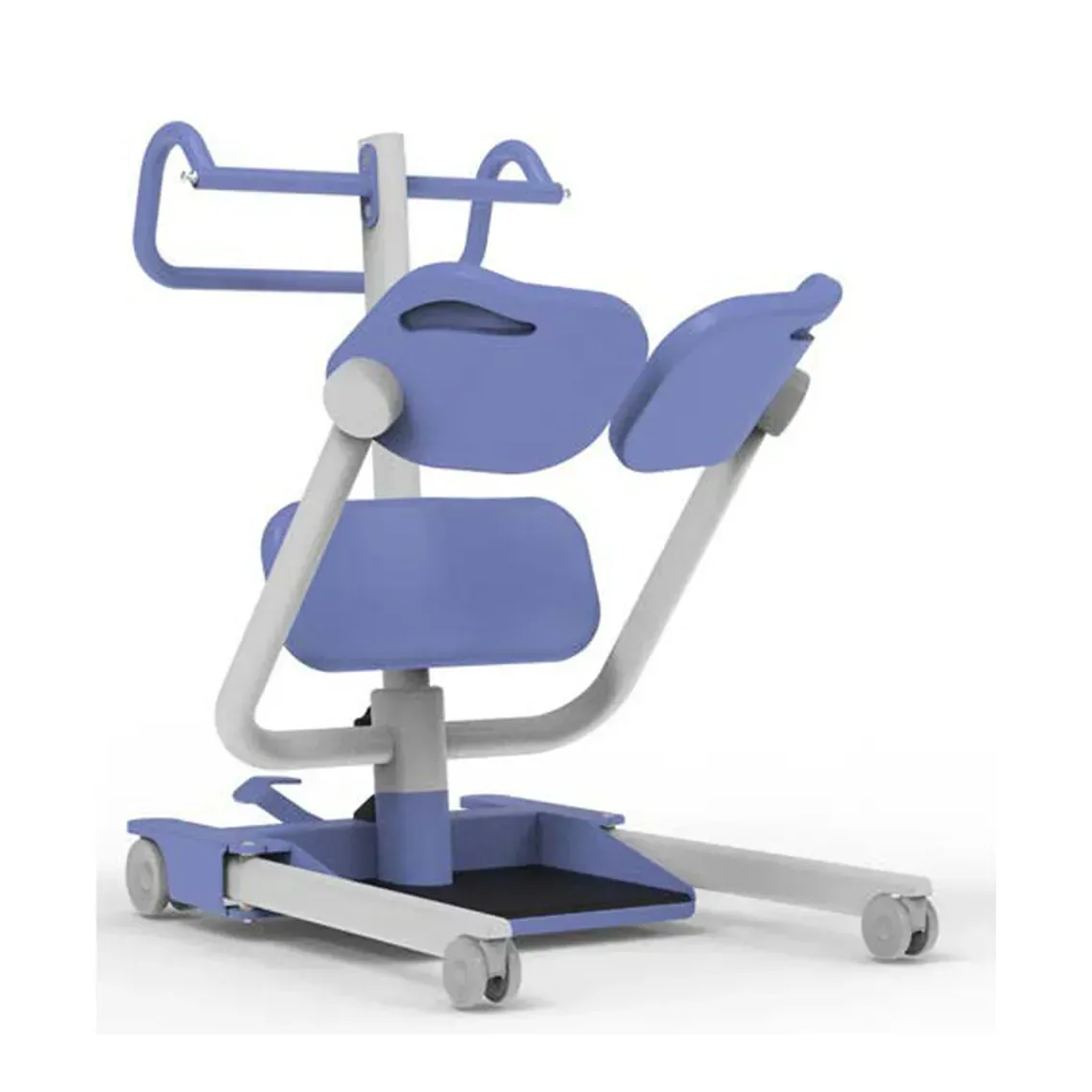 Hoyer Up
440 lb. Non-powered and sling-free. Padded swing seats fold out once the person is standing so they can be moved seated.
Manual, no sling
Hoyer Up
440 lb. Non-powered and sling-free. Padded swing seats fold out once the person is standing so they can be moved seated.
Manual, no sling
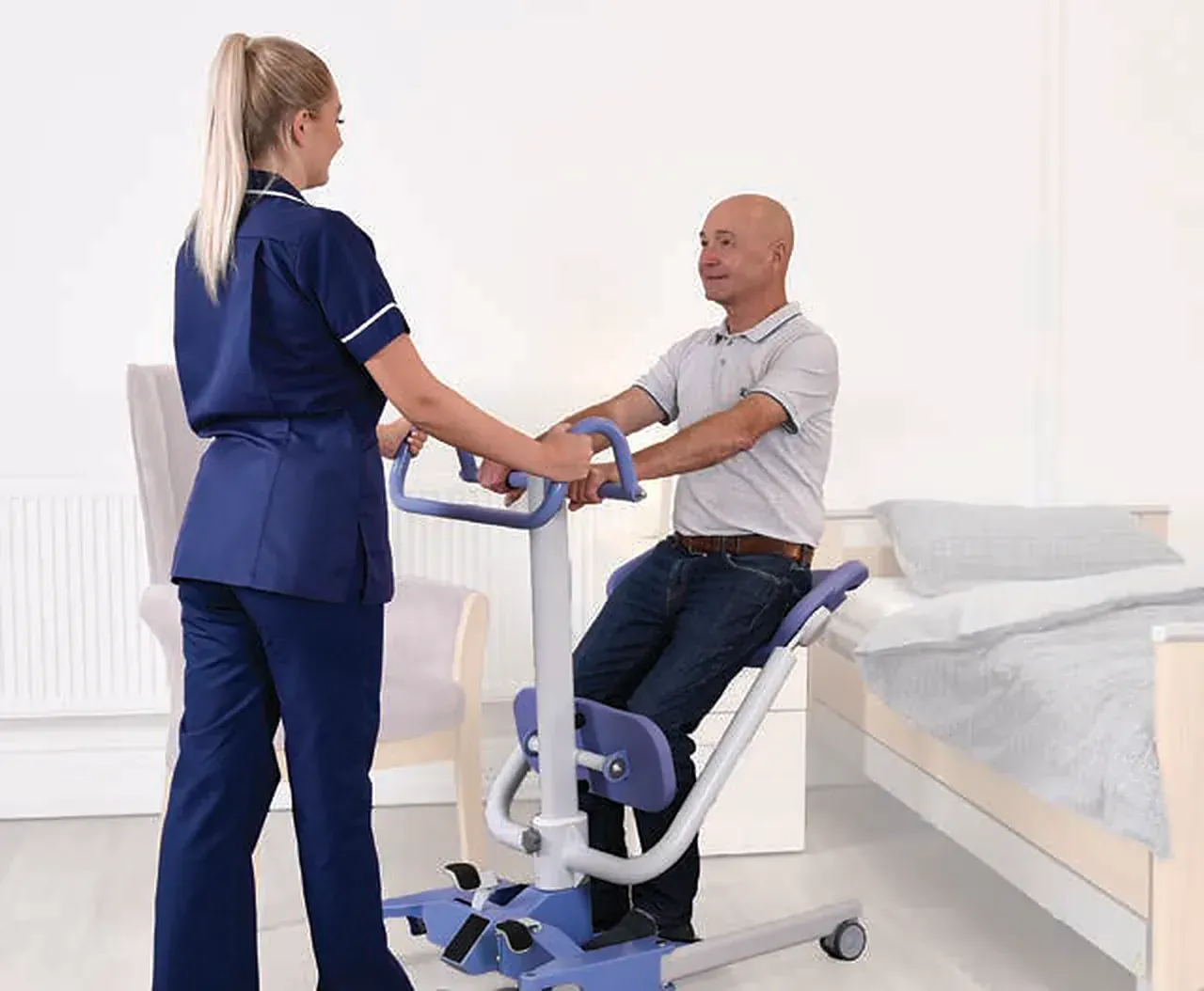 Hoyer Up in use
Knees against the pad, hands on the bar, and a caregiver guiding rather than lifting.
Hoyer Up in use
Knees against the pad, hands on the bar, and a caregiver guiding rather than lifting.
Side by side
| Question | Floor lift | Ceiling lift | Freestanding gantry | Sit-to-stand |
|---|---|---|---|---|
| Anything installed? | No | Yes, track mounted to ceiling structure | No, stands on its own feet | No |
| Floor space during use | Base must open around furniture | None | Footprint of the frame, usually around the bed | Compact base |
| Reaches the bathroom? | Rarely, most bases will not fit | Yes, on a track that runs there | Only where the frame is set up | Yes, rolls to the toilet |
| One caregiver alone? | Usually, but they push a loaded lift | Yes, nothing to push | Yes, nothing to push | Yes, if the person can bear weight |
| Moves room to room? | Yes | Only where tracks are installed | Can be moved, but it is a setup, not a roll | Yes |
| Floor recovery after a fall? | Yes | Only under the track | Only under the frame | No |
| Goes with you if you move? | Yes | Track stays with the house | Yes | Yes |
| Level of dependence | Complete dependence | Complete dependence | Complete dependence | Partial, must bear some weight |
| Typical capacity we install | 340 to 850 lb by model | 600 lb (TX Advanced), 440 lb (CPP) | 440 lb | 340 to 440 lb by model |
How to decide
Joerns publishes a simple framework that therapists use. If the person is dependent but can still help, meaning they can bear some weight, sit up with help, and follow directions, a stand-aid lift should be available and a floor or overhead lift may be needed. If the person is completely dependent, a floor or overhead lift must be available and a stand-aid is unlikely to be used. That single distinction settles more of the decision than anything else. Then work through these:
- How long will the need last? Months points toward a floor lift or a gantry. Years, with the person staying in the home, justifies a ceiling track.
- Which rooms? Bedroom only is easy for any type. Bedroom plus bathroom strongly favors an overhead system or a sit-to-stand. Several rooms favors a floor lift.
- Who is doing the transfers? One older spouse alone is the strongest argument for overhead lifting. A rotating team of aides can manage a floor lift.
- Do you own the home, and what is above the ceiling? Renters and plaster ceilings point to a gantry. Drywall over joists usually supports a track after assessment.
- Weight and body shape. Check the safe working load of the lift and the sling. Near 400 lb, look at the HPL700 or Calibre from the start.
- Where will it live between uses? A floor lift needs a parking spot. A gantry stays over the bed. A ceiling track disappears.
A word about slings
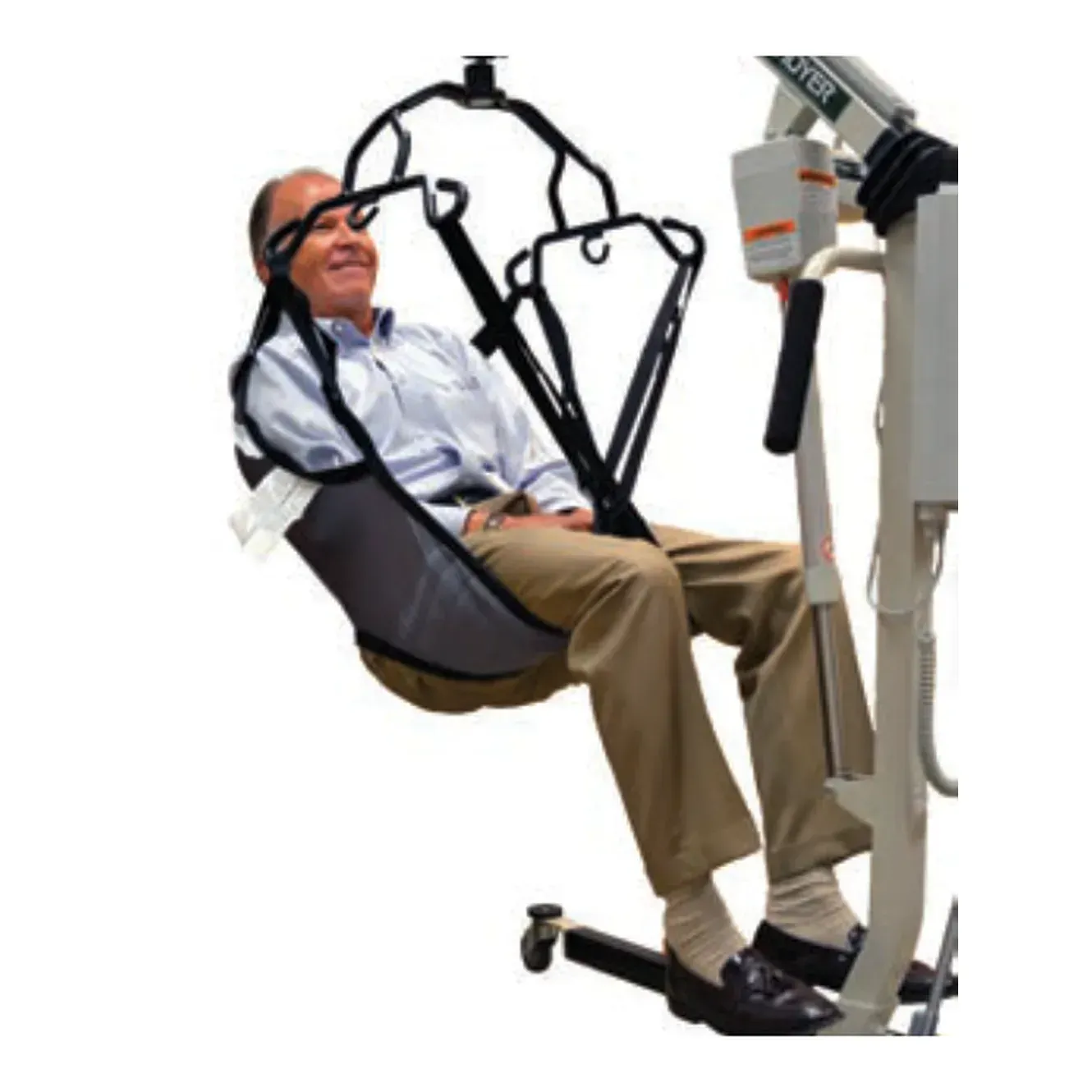
The sling is the part that touches the person, and it is the most common follow-up question we get. A few things worth knowing before you buy:
- One general-purpose sling covers most people. Joerns rates its Quickfit Deluxe as suitable for about 95 percent of patients. Toileting slings, which leave the bottom open so clothing can be adjusted, suit only about a quarter of patients and require the person to sit upright, so they are a second sling, not a first.
- Sizes are color coded on the edge binding, and each size covers a weight range. The right size is fitted, not guessed. We size it with the person at the evaluation.
- Mesh for bathing. Polyester net slings drain and dry quickly. Padded slings are for comfort in everyday transfers.
- Head support matters for anyone who cannot hold their head up or has involuntary movements. Full-back and comfort slings add a boned head section.
- Check both ratings. The lift and the sling each carry a safe working load, and they can differ. The lower number governs. Bariatric slings are rated to 850 lb and use striped binding so they are not confused with standard sizes.
Paying for a patient lift
We do not publish patient lift pricing, because the right system depends on the person, the home, and how transfers happen, and a floor lift and a two-room ceiling track are very different projects. What we can tell you is how the main programs treat patient lifts, so you know which conversations to have.
Medicare
Medicare Part B covers a patient lift as durable medical equipment under a specific rule: transfers between bed and a chair, wheelchair, or commode must be required, and without the lift the person would be confined to bed. Under the current Medicare coverage determination, hydraulic floor lifts, electric floor lifts, freestanding pole and gantry systems, and ceiling-track lifts are all listed as coverable when that criterion is met. Two things Medicare will not pay for: home modifications or structural work tied to a lift, and separate installation charges for a ceiling track. Coverage requires a face-to-face visit with the treating practitioner, a written order before delivery, and a supplier enrolled in Medicare. You pay 20 percent of the approved amount after the Part B deductible. We can help you understand how those rules apply to your situation.
VA benefits
For Veterans enrolled in VA health care, patient lifts are medical equipment. That means they are typically furnished through VA Prosthetic and Sensory Aids Service when a VA provider prescribes one, not purchased through a grant. The HISA grant does not fund removable equipment, so it is not the path to a lift itself, though HISA can cover plumbing or electrical work made necessary by home medical equipment. Larger SAH and SHA grants apply to specific service-connected disabilities. The VA makes every eligibility and authorization decision; Altamira helps you understand the options and prepare documentation. Our VA benefits comparison and HISA guide go deeper.
Medicaid waivers, private insurance, and other routes
State Medicaid home and community-based services waivers can include lifts and, in some states, home modifications, with rules and waiting lists that vary by state. Private insurance and Medicare Advantage plans follow their own policies. Our guide to eight ways to fund home accessibility covers the rest, including tax deductions and financing.
Frequently asked questions
Is a Hoyer lift the same thing as a patient lift?
Not exactly. Hoyer is a brand name owned by Joerns Healthcare, and the original Hoyer was a floor-based sling lift. Over time the name became shorthand for any floor lift, the way people say Kleenex for tissues. A patient lift is the broader category, which also includes ceiling lifts, freestanding gantry lifts, and sit-to-stand lifts.
Can one caregiver operate a patient lift alone?
Often, yes, once trained. Powered floor lifts and ceiling lifts are designed so a single caregiver can complete a transfer without lifting any of the person's weight. Some situations still call for two people, such as a person who is agitated, has unpredictable movements, or is being lifted from the floor. Your care team or therapist can advise for your situation, and we walk through it at the in-home evaluation.
Does Medicare pay for a patient lift?
Medicare Part B can cover a patient lift as durable medical equipment when a doctor documents that transfers between bed and a chair, wheelchair, or commode are required and, without the lift, the person would be confined to bed. This requires a face-to-face visit, a written order before delivery, and a Medicare-enrolled supplier. You pay 20 percent of the approved amount after the Part B deductible. Medicare does not pay for structural work or ceiling-track installation.
Will the VA provide a patient lift for a Veteran at home?
It may. Patient lifts are medical equipment, so for enrolled Veterans they are typically furnished through VA Prosthetic and Sensory Aids Service when a VA provider prescribes one. They are not a HISA grant item, though HISA can help with electrical work made necessary by home medical equipment. The VA makes every eligibility and authorization decision. Altamira helps you understand options and prepare documentation.
Do I need to modify my house for a ceiling lift?
A fixed ceiling track is mounted to the structure, so it depends on what is above your ceiling. Many homes can support a track after an assessment; some need reinforcement. If mounting is not practical, or you rent, a freestanding gantry such as the Mackworth FSG or Easy Fit 440 gives you overhead lifting with no mounting to walls, ceiling, or floor.
What if the person weighs more than 400 pounds?
There are lifts built specifically for higher capacities. The Hoyer HPL700 is rated to 700 lb and the Hoyer Calibre to 850 lb, both with a wider open cradle and an optional or built-in scale. Bariatric slings are rated separately. Always check the safe working load of both the lift and the sling and use the lower number.
Let us look at the room before you decide
The right lift depends on the person, the caregiver, and the house, and the only way to get it right is to stand in the bedroom and measure. Our free in-home evaluation covers the transfer routine, doorways and ceiling structure, sling sizing, and which funding path may apply. No pressure, no obligation, just honest guidance from a local, veteran-owned team.
Request a Free In-Home Evaluation Call 800-343-1066
Altamira Ltd. is a Service-Disabled Veteran-Owned Small Business serving Pittsburgh and surrounding communities. See our patient lift systems and caregiver support resources.
Sources: Waters, T.R., "When is it safe to manually lift a patient?" American Journal of Nursing (2007), as cited by OSHA; Joerns Healthcare Hoyer product catalog (2025), citing BLS and Smedley et al.; Mackworth CPP and FSG data sheets (Rev A, 2025) and mackworthusa.com; CMS Local Coverage Determination L33799 and Policy Article A52516, Patient Lifts; VA Prosthetic and Sensory Aids Service and HISA program information at prosthetics.va.gov. Altamira is a home accessibility dealer and installer, not a medical provider, insurer, or the Department of Veterans Affairs. Coverage decisions are made by Medicare, the VA, or your plan.